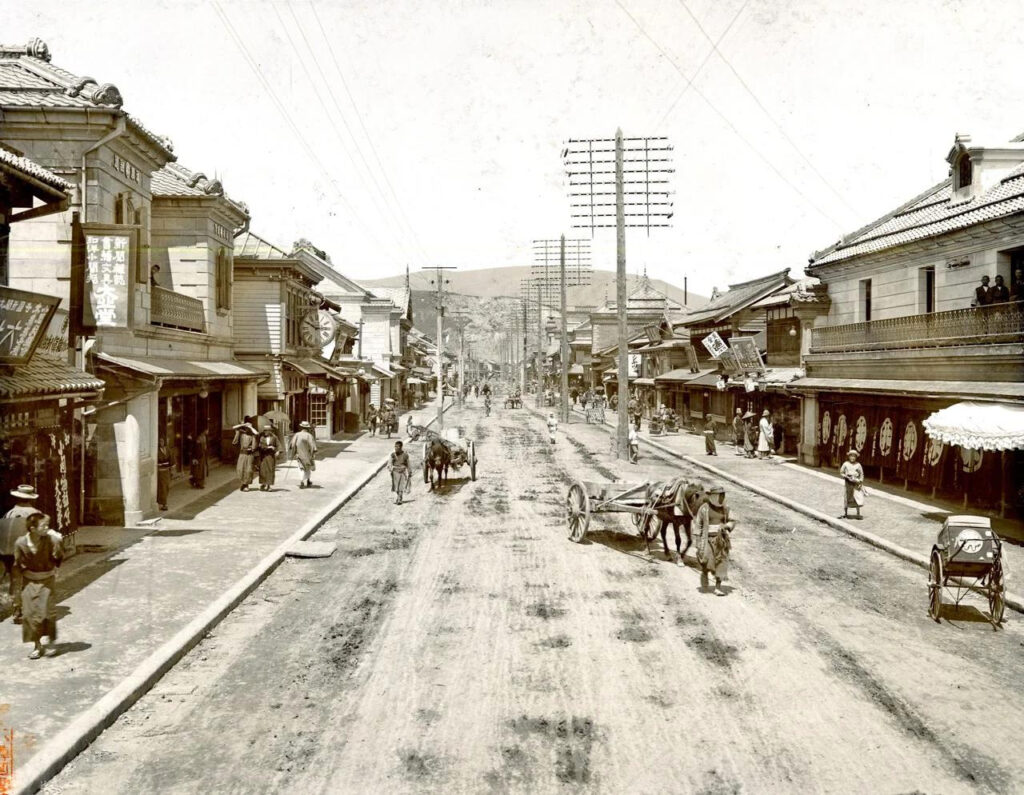
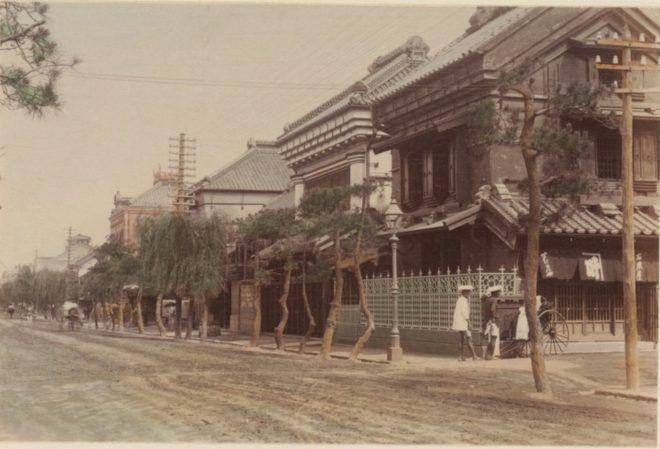
明治〜大正時代頃の群馬県高崎の街並み
This photograph shows a historic streetscape in Takasaki, Gunma Prefecture. The exact date of the photograph is unknown.
Source: Wikimedia Commons (Public Domain)
群馬県は、戦後に4人の内閣総理大臣を輩出しており、都道府県別では戦後最多とされています。
Gunma Prefecture has produced four Prime Ministers of Japan since the end of World War II, the highest number among Japan’s prefectures during the postwar period.
Japanese Era Names: Meiji, Taisho, and Showa
Japan has a traditional system of naming historical periods according to the reign of the emperor. These names are called era names, or nengō (年号) in Japanese.
Unlike the Western calendar, in which the year continues from one number to the next, the year number in Japan changes when a new imperial era begins.
For example, the three eras that are particularly important in modern Japanese history are:
- Meiji (明治) — 1868–1912
- Taisho (大正) — 1912–1926
- Showa (昭和) — 1926–1989
The year is usually written together with the era name. For example, Showa 5 (1930) means the fifth year of the Showa era, corresponding to 1930 in the Western calendar.
The first year of an era is traditionally called “Gannen” (元年) rather than “Year 1.” Thus, Showa Gannen means 1926, the first year of the Showa era.
Why are these names important?
Japanese people commonly use era names when referring to historical events, buildings, photographs, documents, and everyday objects from the past. Therefore, you will often see expressions such as:
Meiji period
Taisho period
early Showa period
These expressions are not simply historical labels. They often give a sense of the particular atmosphere and culture of the time.
For example, Taisho is often associated with a period of cultural change and the influence of Western culture, while the early Showa period refers to the years when Japan was undergoing rapid modernization, before and around the Second World War.
A simple conversion guide
For reference, the following approximate conversions are useful:
| Japanese era | Western calendar |
|---|---|
| Meiji 1 | 1868 |
| Meiji 45・Taisho 1 | 1912 |
| Taisho 15・Showa 1 | 1926 |
| Showa 10 | 1935 |
| Showa 20 | 1945 |
| Showa 30 | 1955 |
| Showa 40 | 1965 |
| Showa 50 | 1975 |
| Showa 64・Heisei 1 | 1989 |
| Heisei 31・Reiwa 1 | 2019 |
There is an important point to remember: Meiji 45 and Taisho 1 are both 1912, and Taisho 15 and Showa 1 are both 1926. This is because an era changes during the calendar year, following the change of emperor.
In my works, I sometimes use expressions such as “early Showa” or specify a particular Showa year. This is because the atmosphere of a building, town, or interior can be quite different depending on the period in which it is imagined.
For viewers unfamiliar with the Japanese era system, the Western calendar shown alongside the era name should make these dates easier to understand.
日本の元号――明治・大正・昭和
日本には、天皇の在位期間に合わせて歴史上の時代を区切り、それぞれに名前を付ける伝統的な制度があります。これを「元号(nengō/年号)」と呼びます。
西暦では、年が1年、2年、3年……と連続していきますが、日本の元号では、天皇が代わるなどして新しい元号が始まると、年数も新たに1年から始まります。
近代日本の歴史を語るうえで特に重要なのが、次の3つの時代です。
- 明治(Meiji) ― 1868~1912年
- 大正(Taisho) ― 1912~1926年
- 昭和(Showa) ― 1926~1989年
日本では、通常、元号と年数を組み合わせて年を表します。例えば、**「昭和5年(1930年)」**は、昭和という元号が始まってから5年目にあたる1930年を意味します。
元号の最初の年は、通常の「1年」ではなく、伝統的に**「元年(Gannen)」と表記することもあります。したがって、「昭和元年」**は、昭和時代の最初の年である1926年を意味します。
なぜ元号が重要なのか?
日本では、歴史上の出来事だけでなく、建物、写真、文書、昔の日用品などについても、元号を使って年代を表すことが一般的です。
そのため、次のような表現をよく目にします。
明治時代
大正時代
昭和初期
これらは単なる年代を示す名称ではありません。それぞれの時代に特有の文化や雰囲気を感じさせる言葉でもあります。
例えば、大正時代は、社会や文化が大きく変化し、西洋文化の影響が広がった時代として知られています。
一方、昭和初期という言葉は、第二次世界大戦前後の時代を含む、日本が急速に近代化していった時期を指す場合があります。
簡単な西暦との対照
参考として、以下のように覚えておくと分かりやすいでしょう。
| 日本の元号 | 西暦 |
|---|---|
| 明治元年 | 1868年 |
| 明治45年・大正元年 | 1912年 |
| 大正15年・昭和元年 | 1926年 |
| 昭和10年 | 1935年 |
| 昭和20年 | 1945年 |
| 昭和30年 | 1955年 |
| 昭和40年 | 1965年 |
| 昭和50年 | 1975年 |
| 昭和64年・平成元年 | 1989年 |
| 平成31年・令和元年 | 2019年 |
ここで一つ注意が必要です。
明治45年と大正元年は、どちらも1912年です。
また、大正15年と昭和元年も、どちらも1926年です。
これは、元号が変わるのが必ずしも1月1日ではなく、天皇の代替わりに伴って、その年の途中で新しい元号が始まるためです。
私の作品では、時代設定を示すために、**「昭和初期」**という表現を使ったり、特定の昭和年を設定したりすることがあります。
これは、建物や街並み、室内の雰囲気などが、想定する時代によって大きく変わることがあるためです。
日本の元号に馴染みのない方にも分かりやすいよう、このサイトの作品解説では、必要に応じて元号とともに西暦も併記しています。
文章:山尾 比呂士|Text:Yamao Hiroshi
English translation: ChatGPT-5.6 Luna