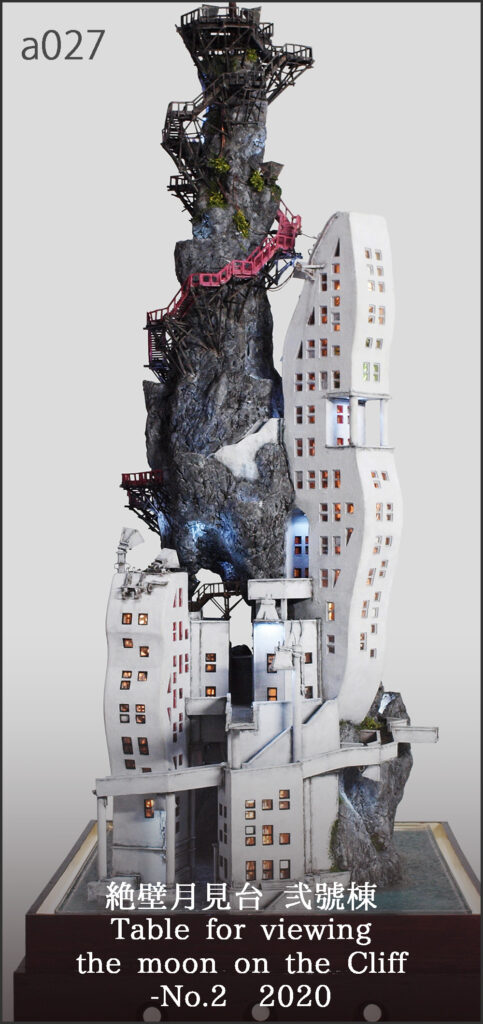

絶壁月見台 弐號棟
(ぜっぺきつきみだい 2ごうとう)
Table for viewing the moon on the Cliff -No.2
a027
制作年:2020
Mixed media
個人蔵・日本|Private Collection, Japan
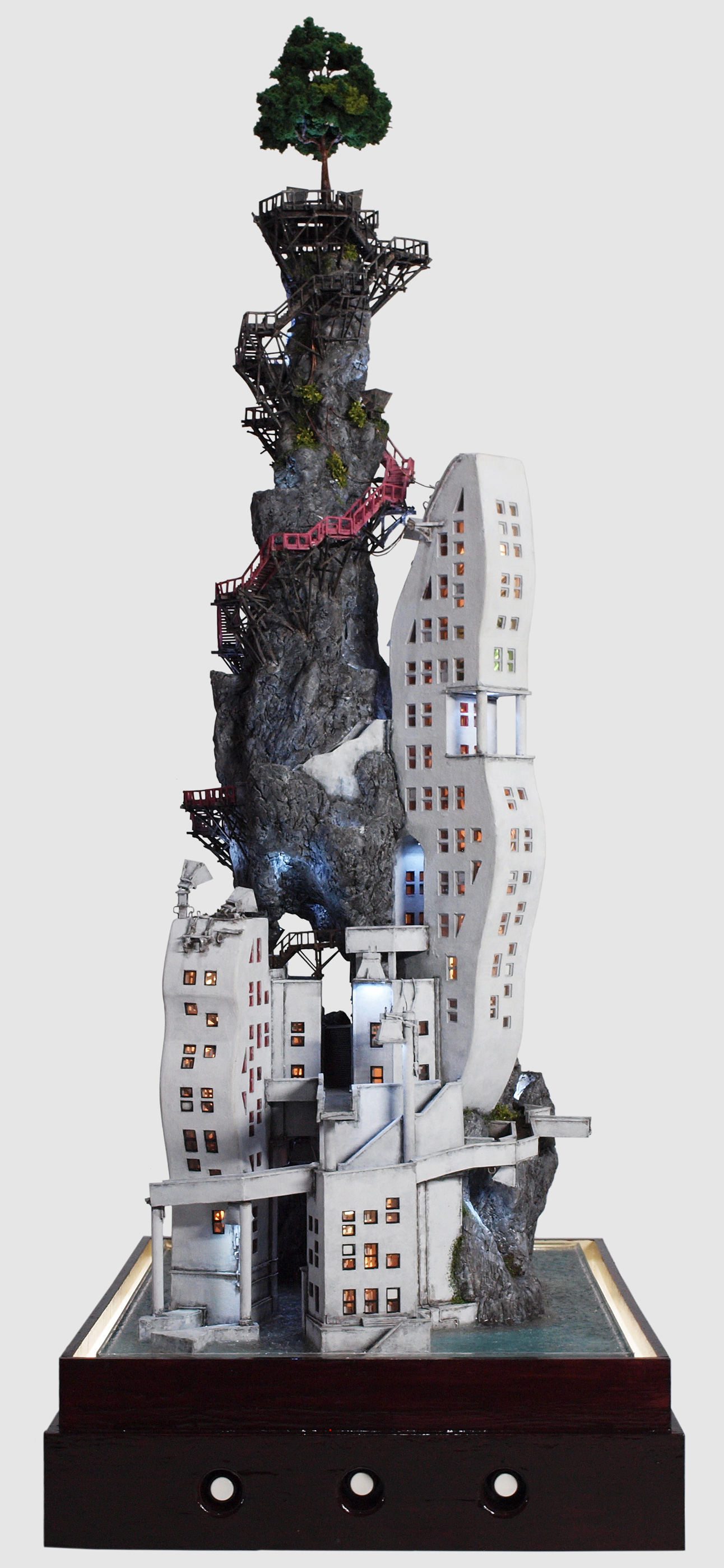
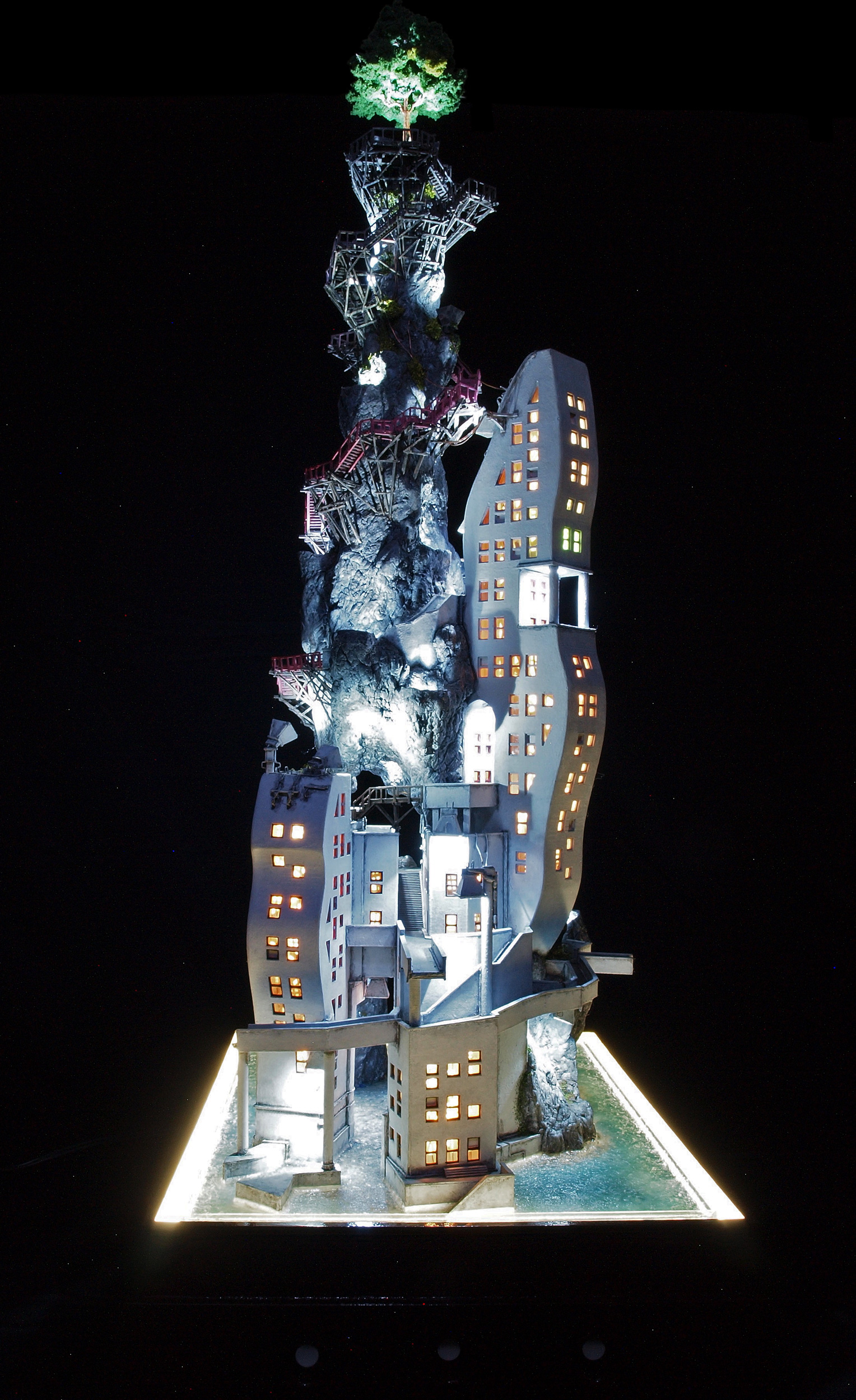
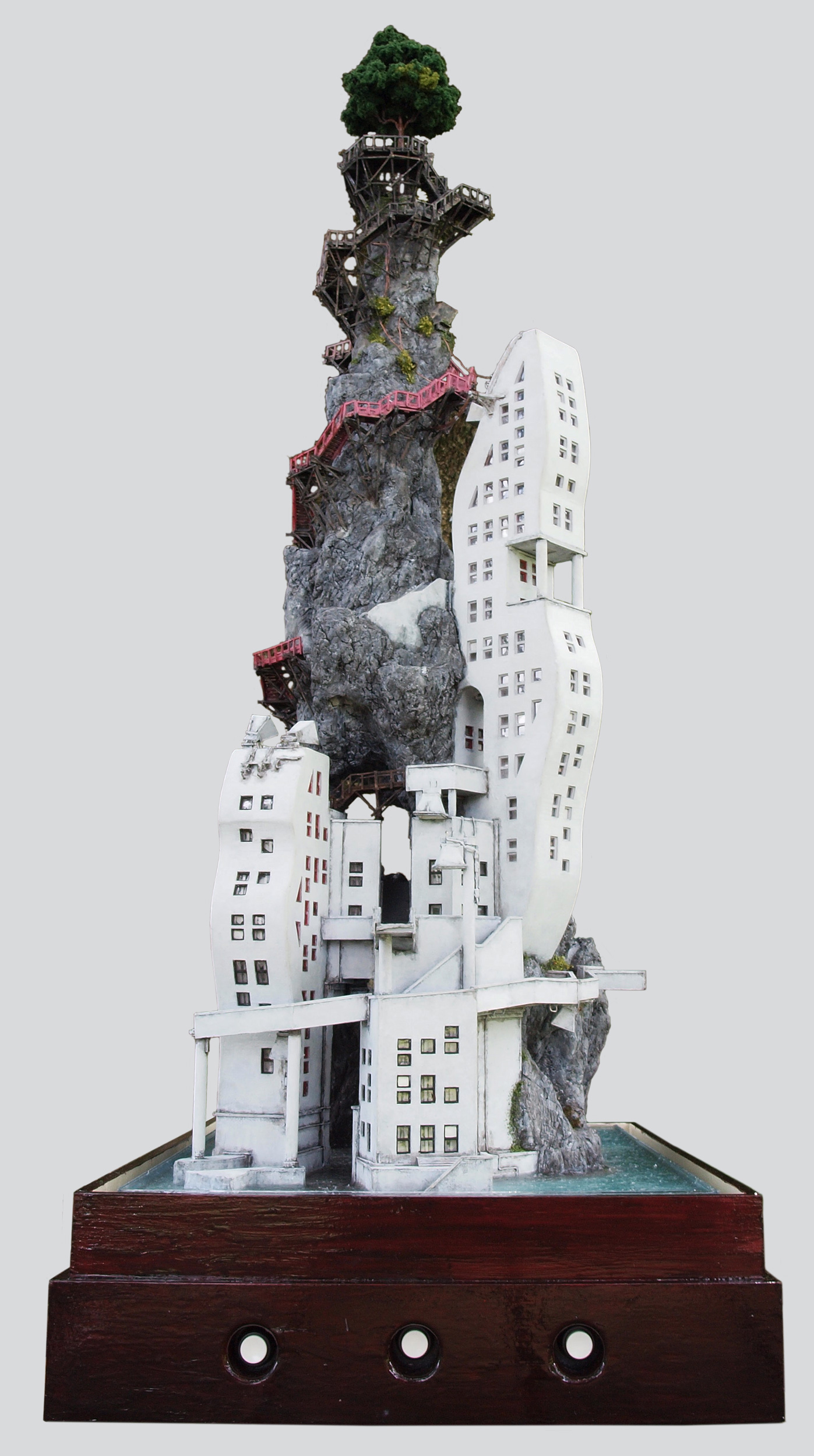
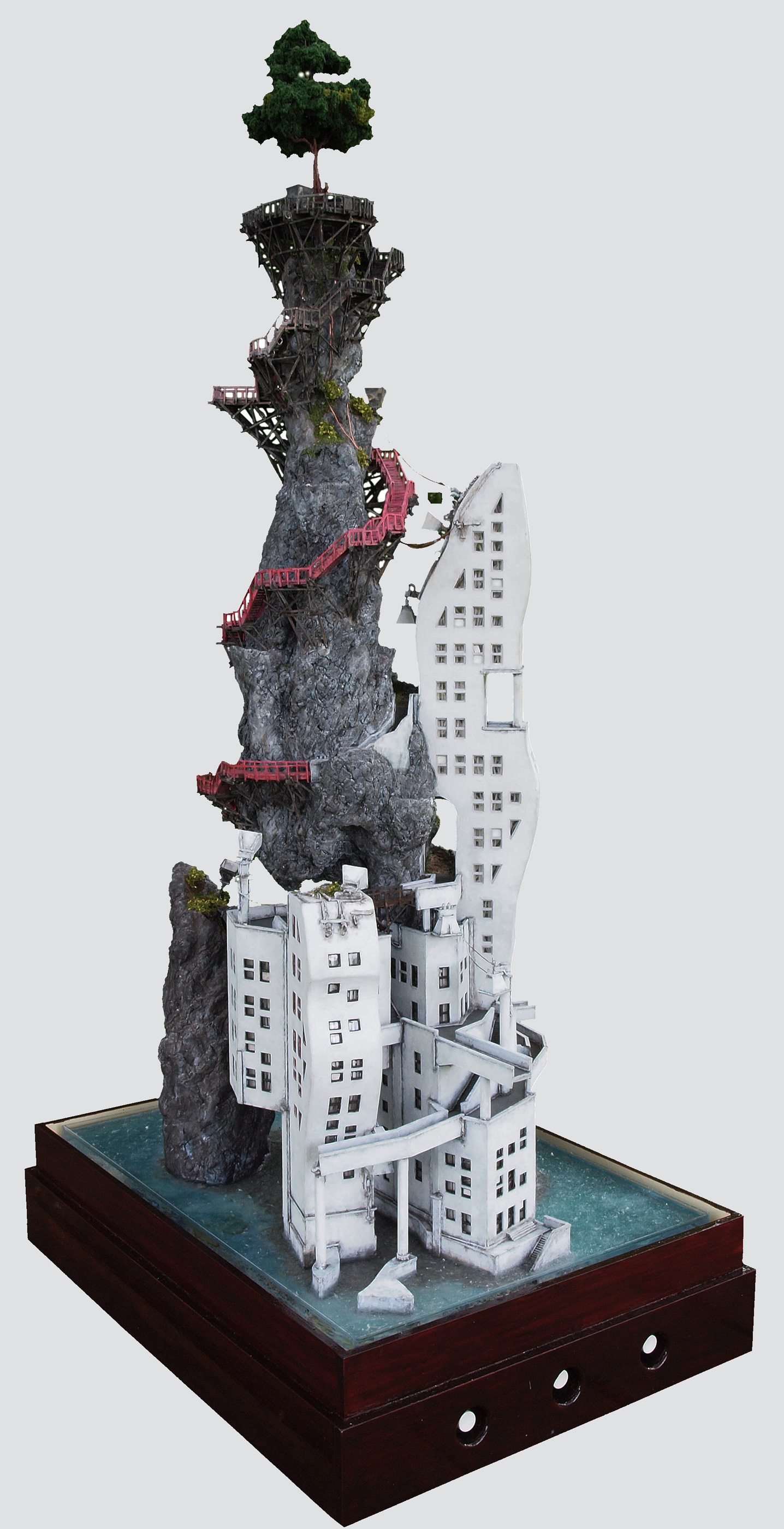
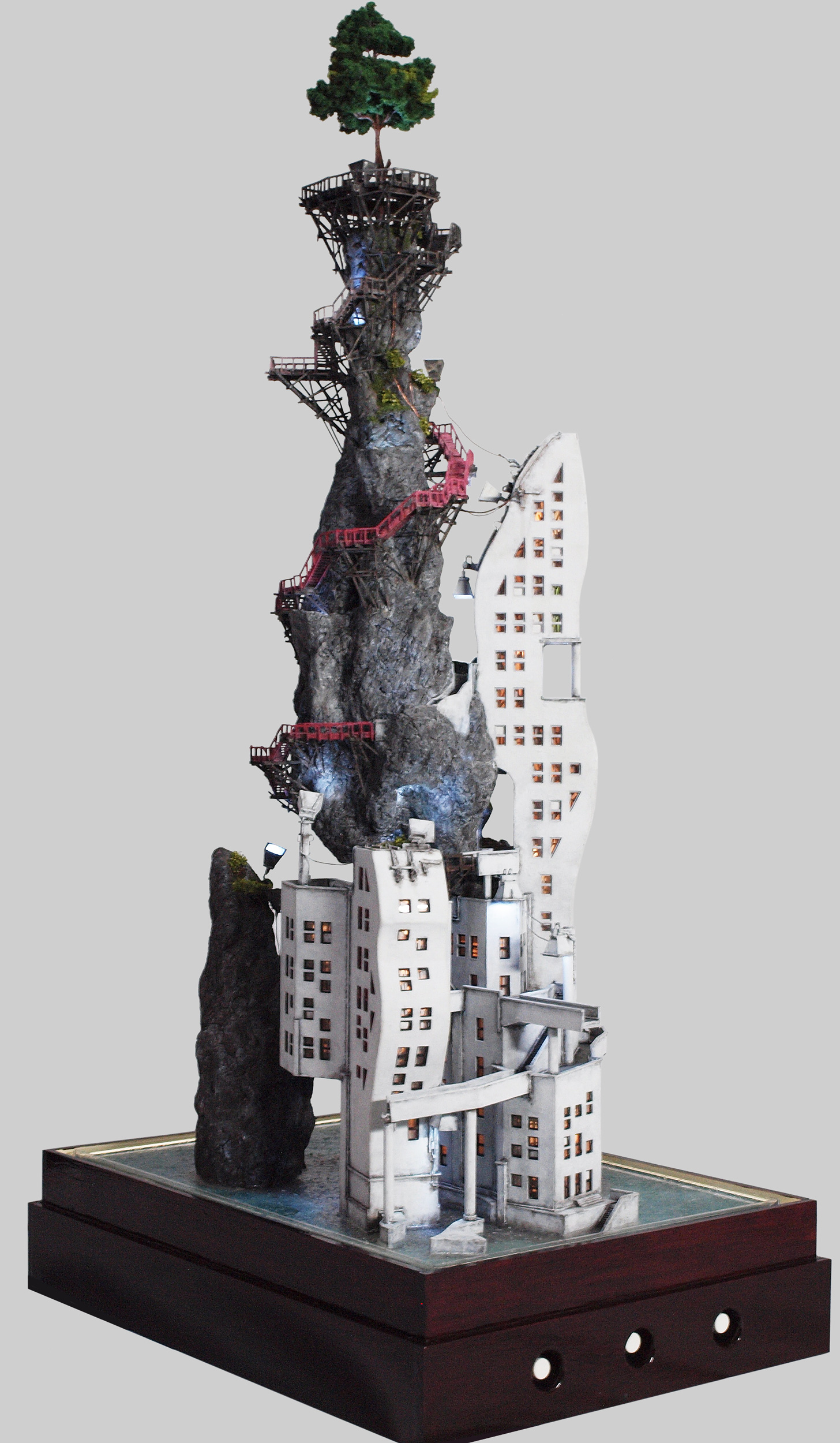
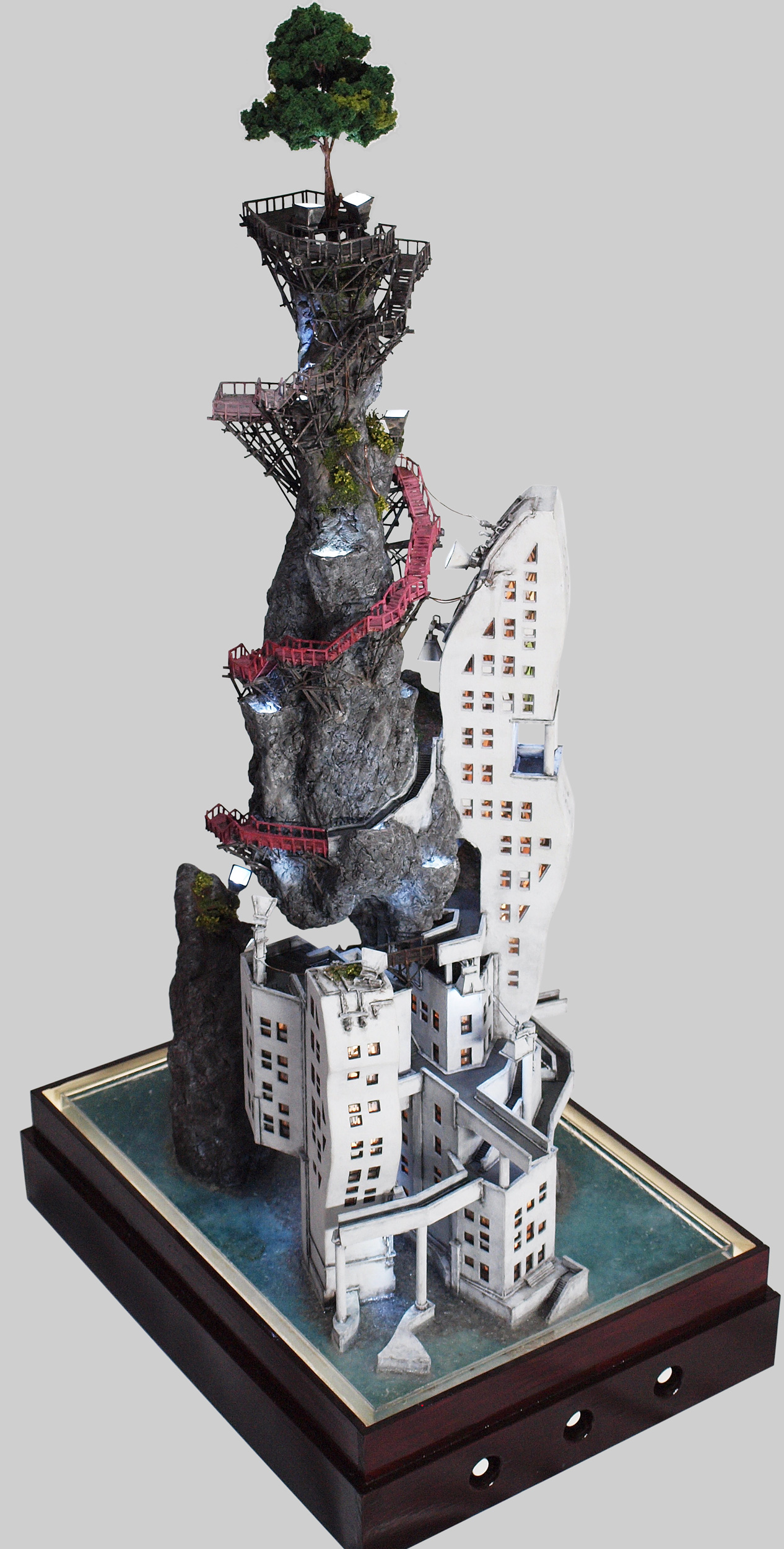
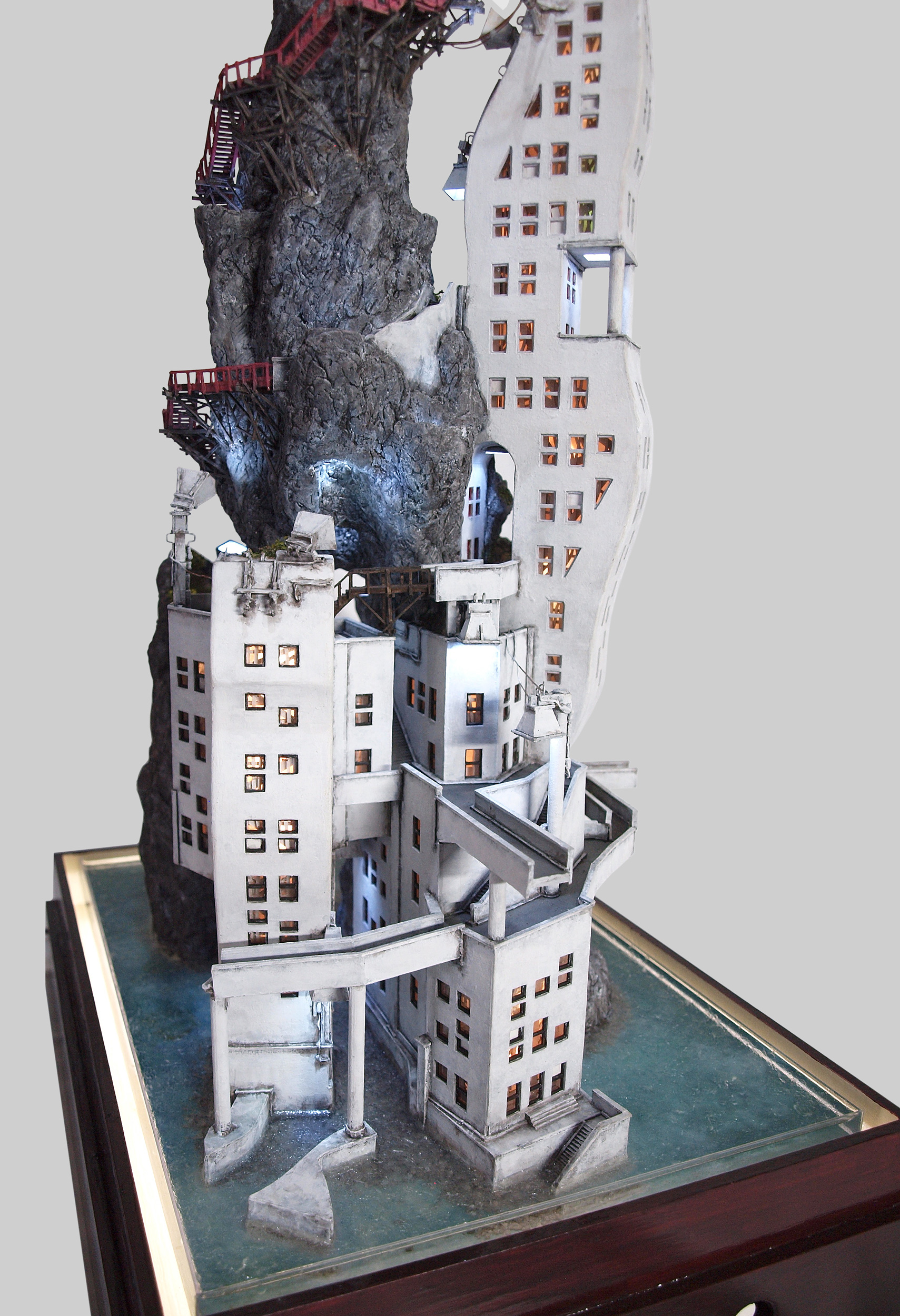
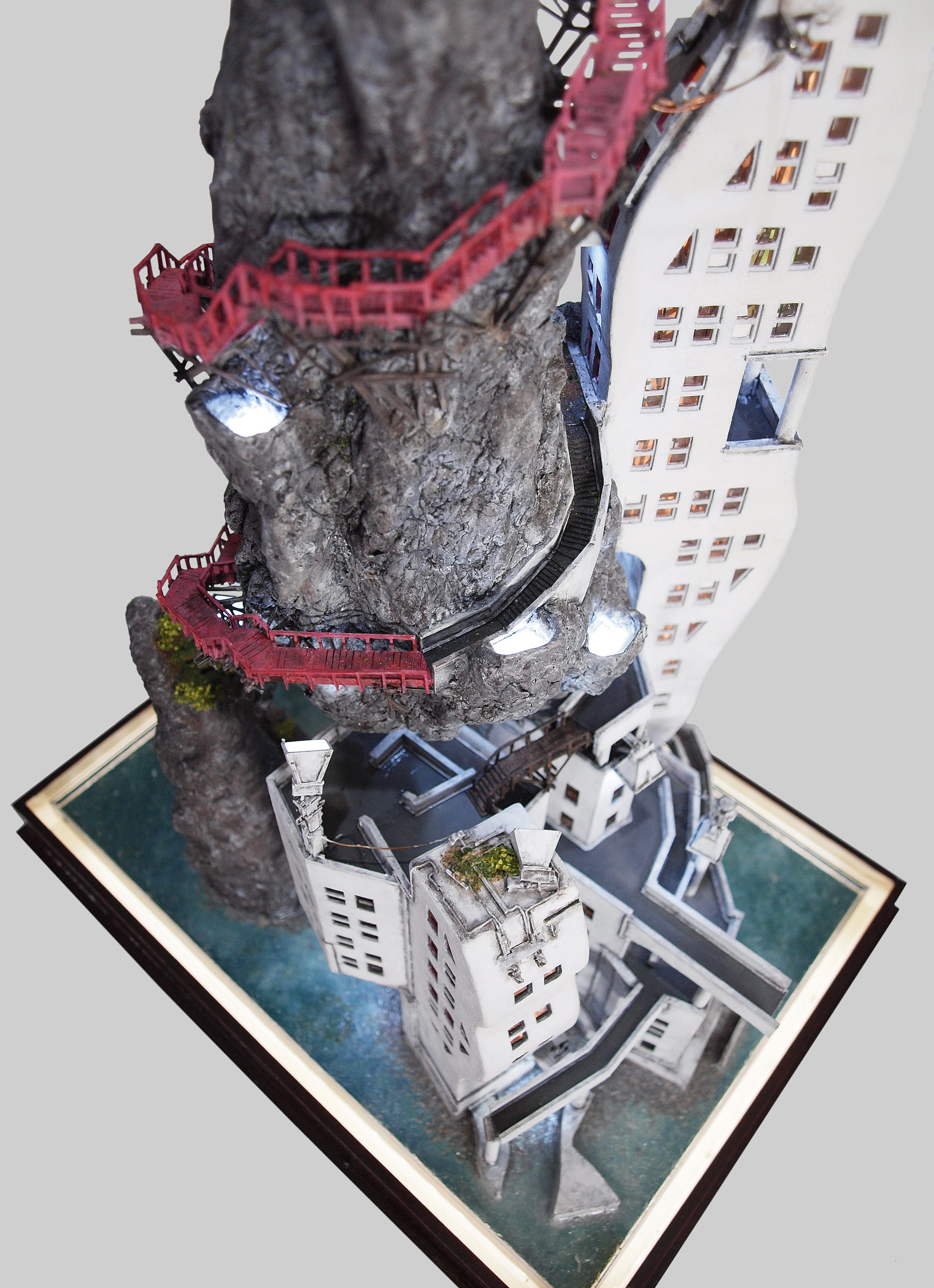
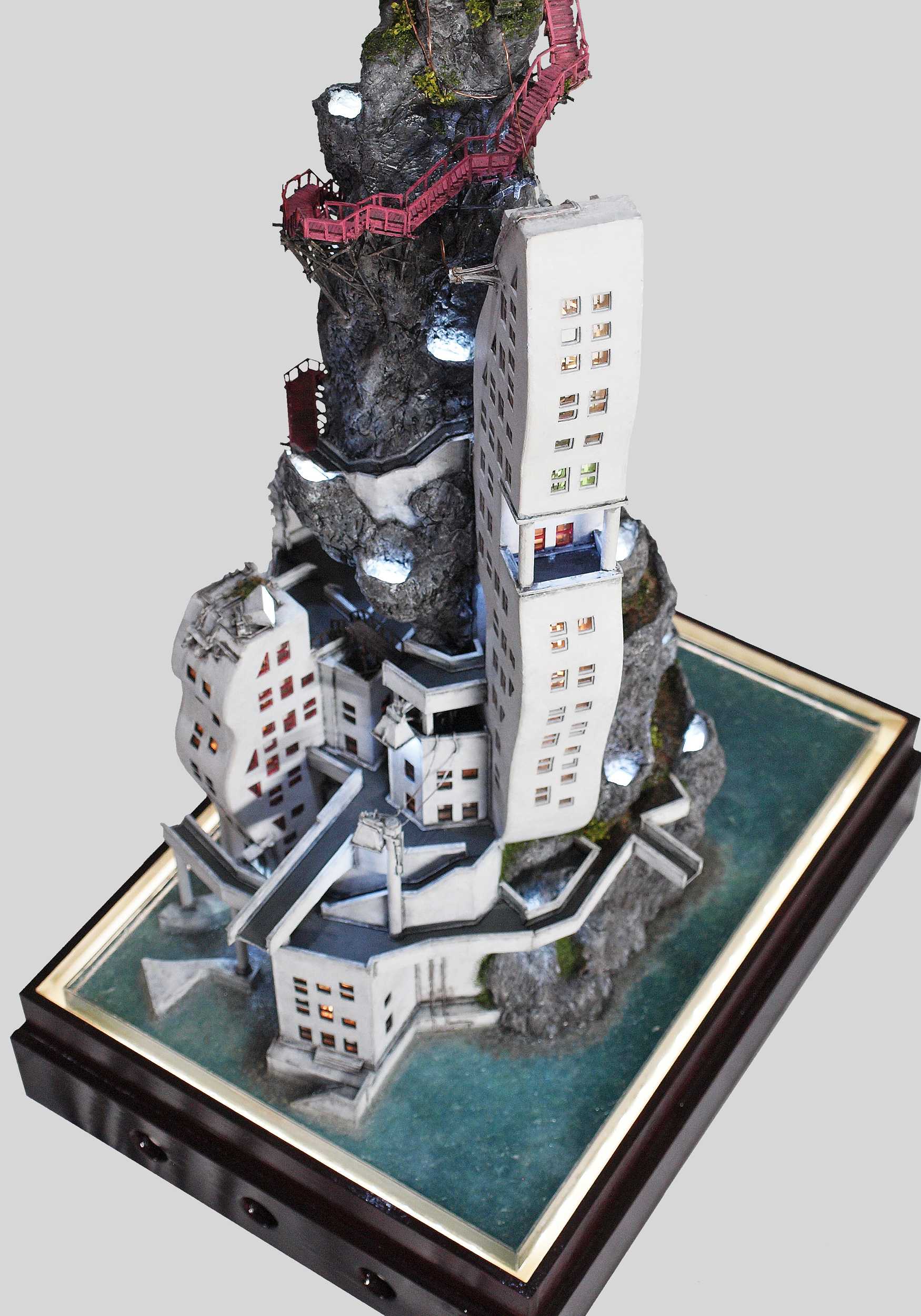
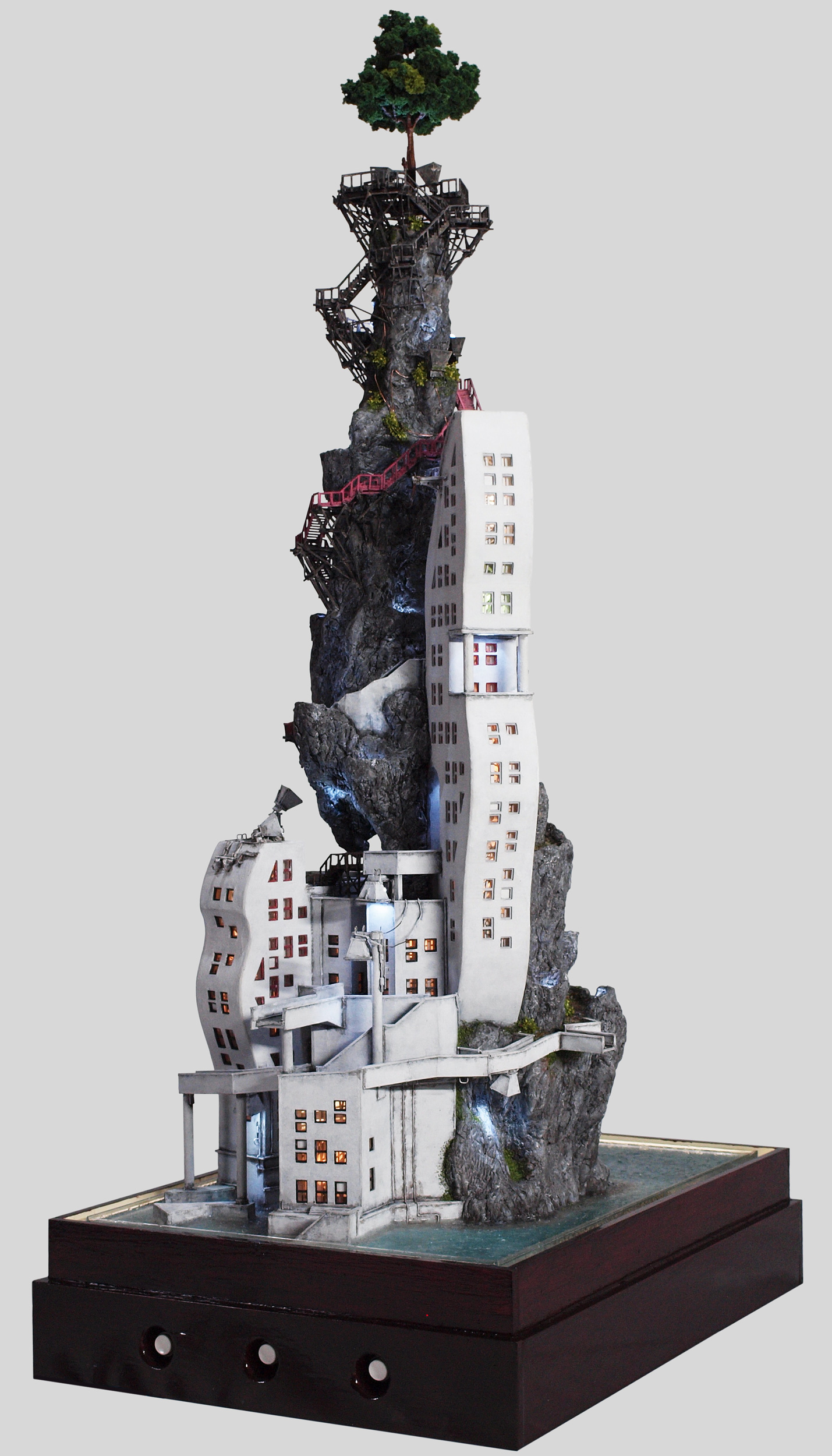
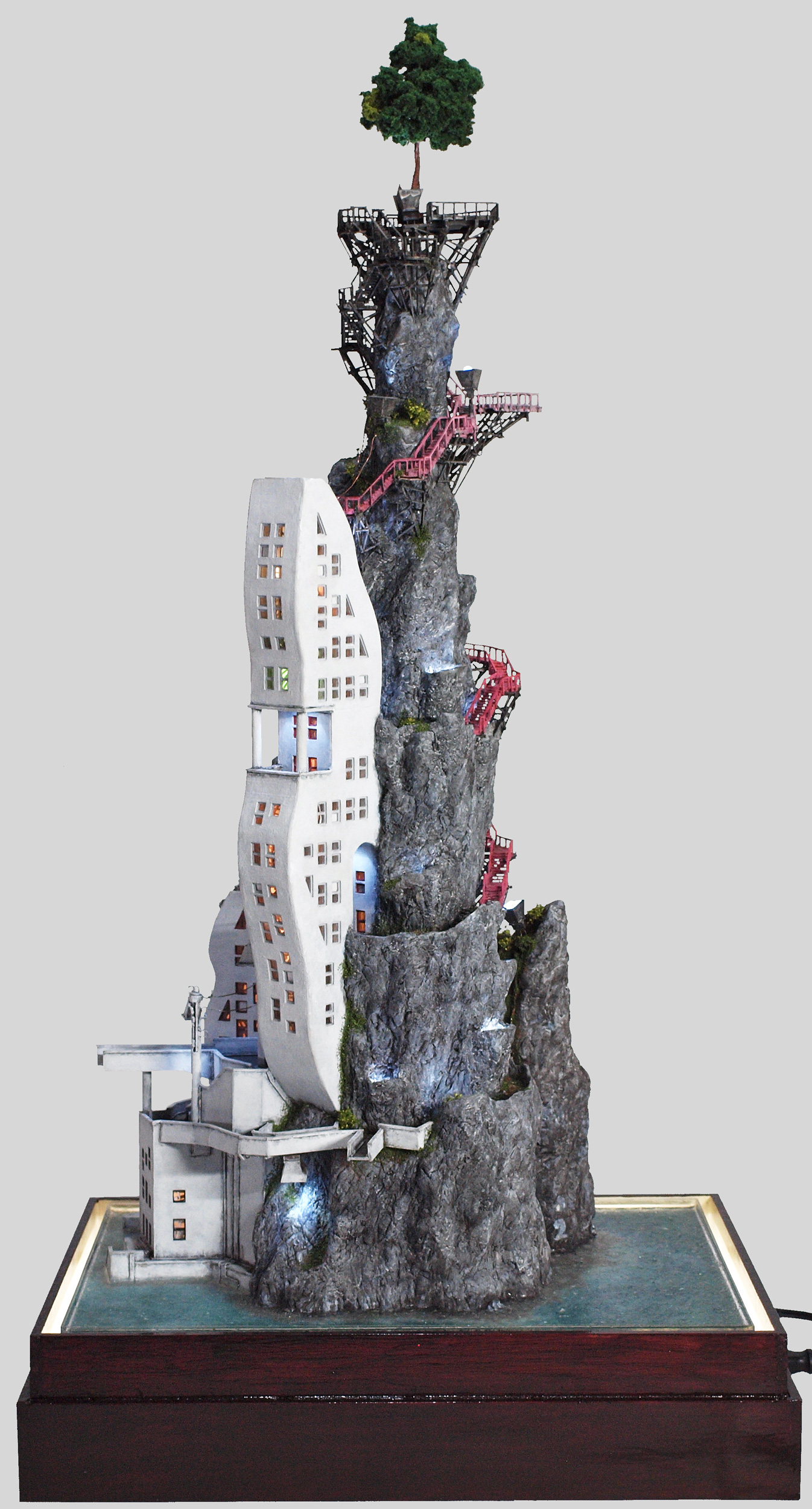
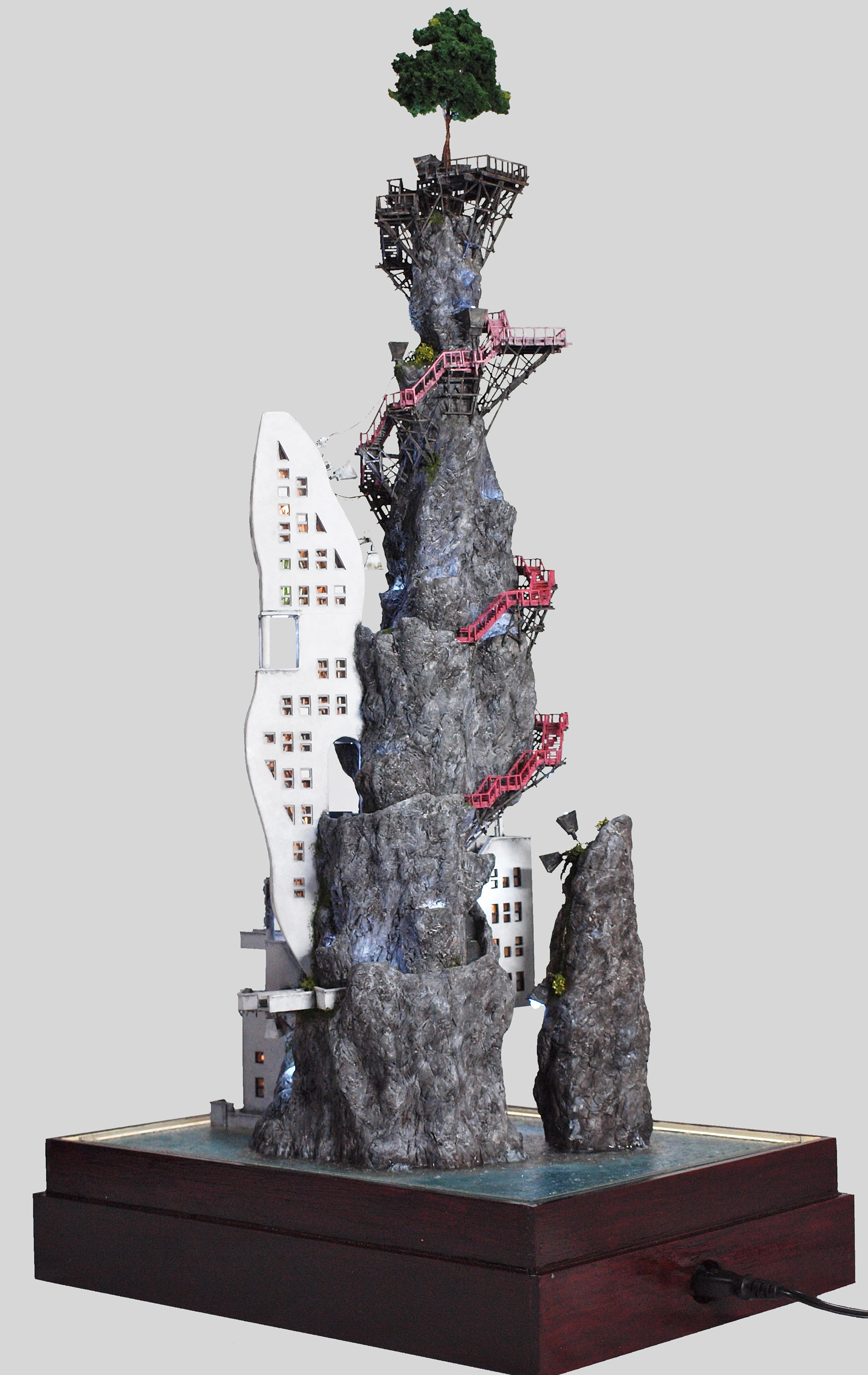
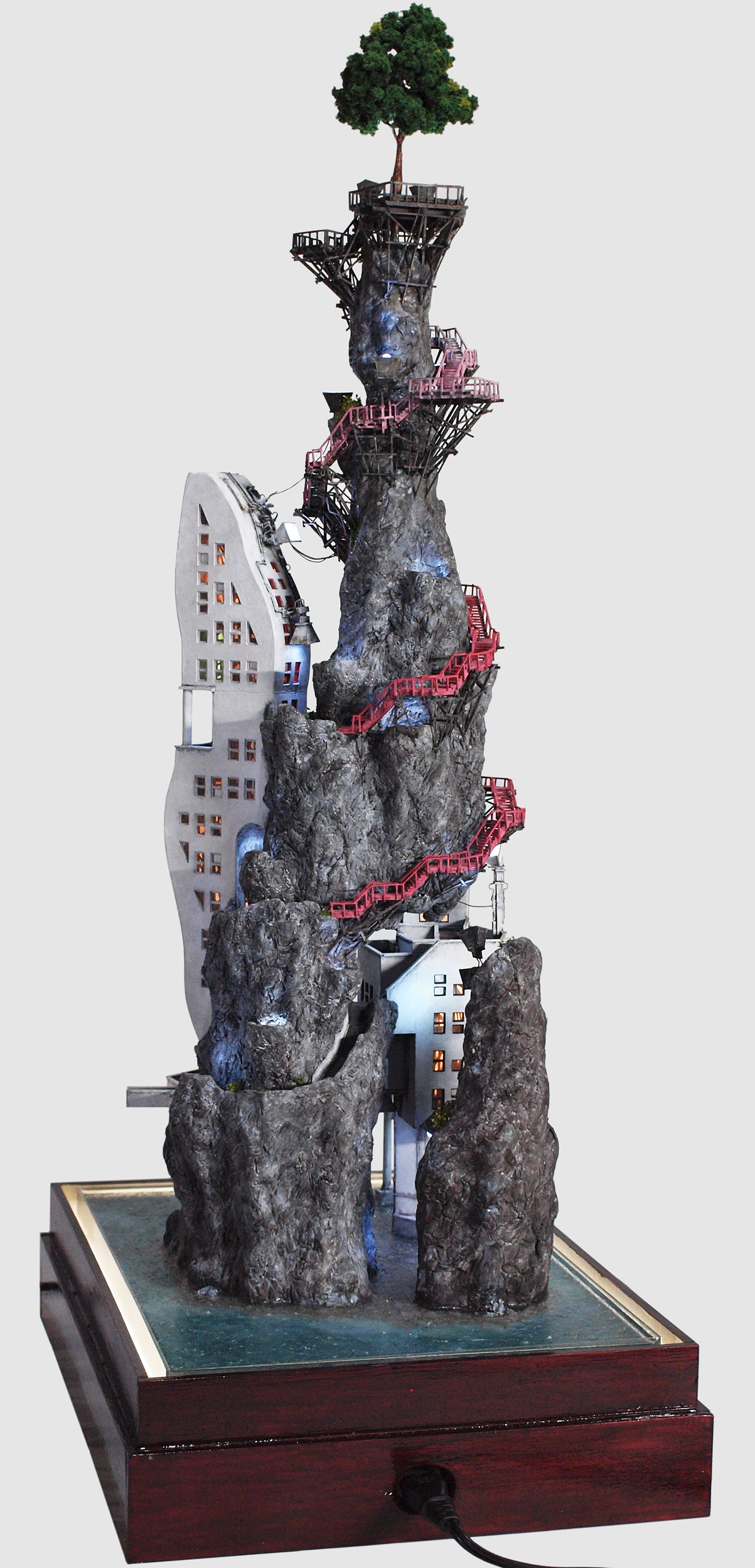
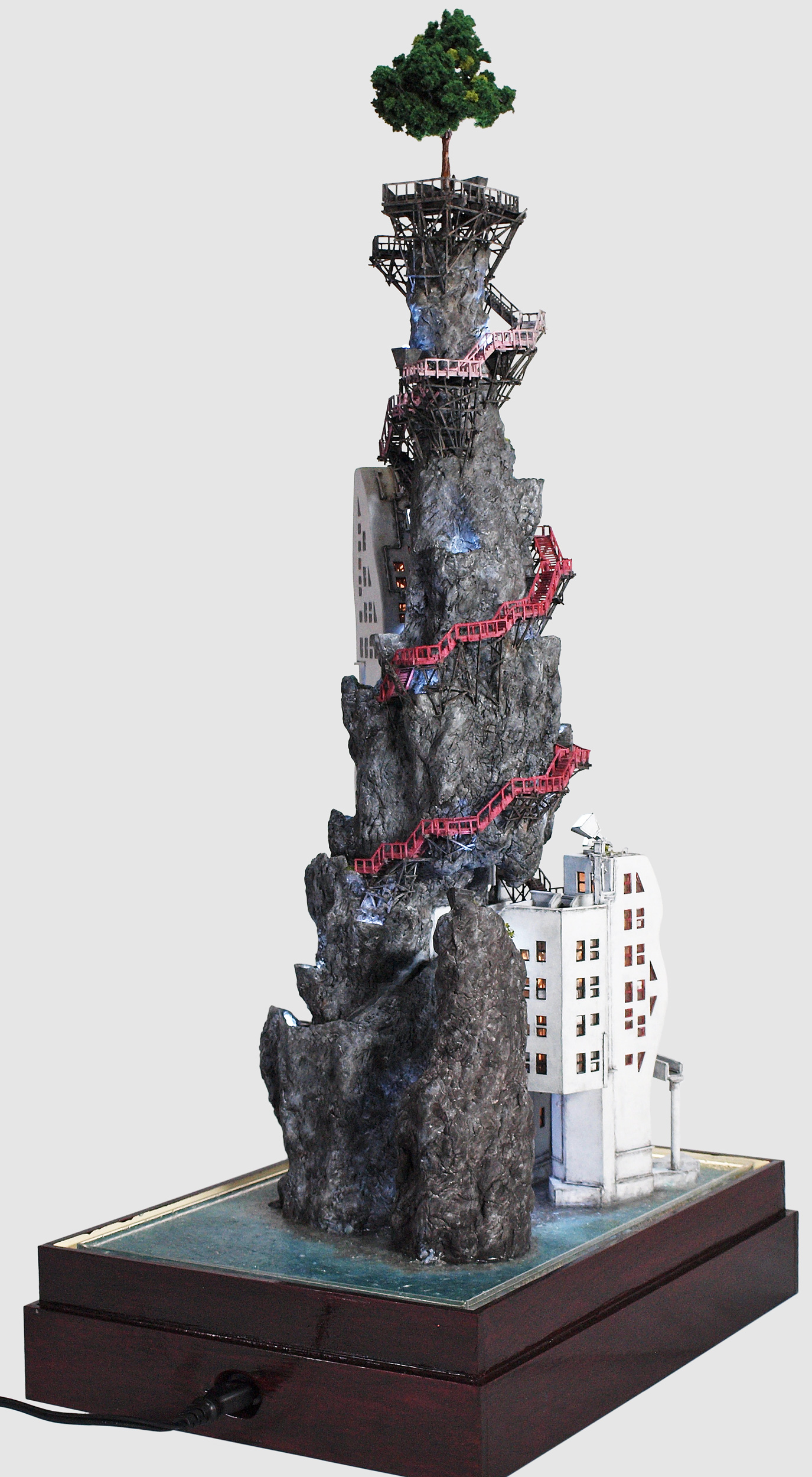
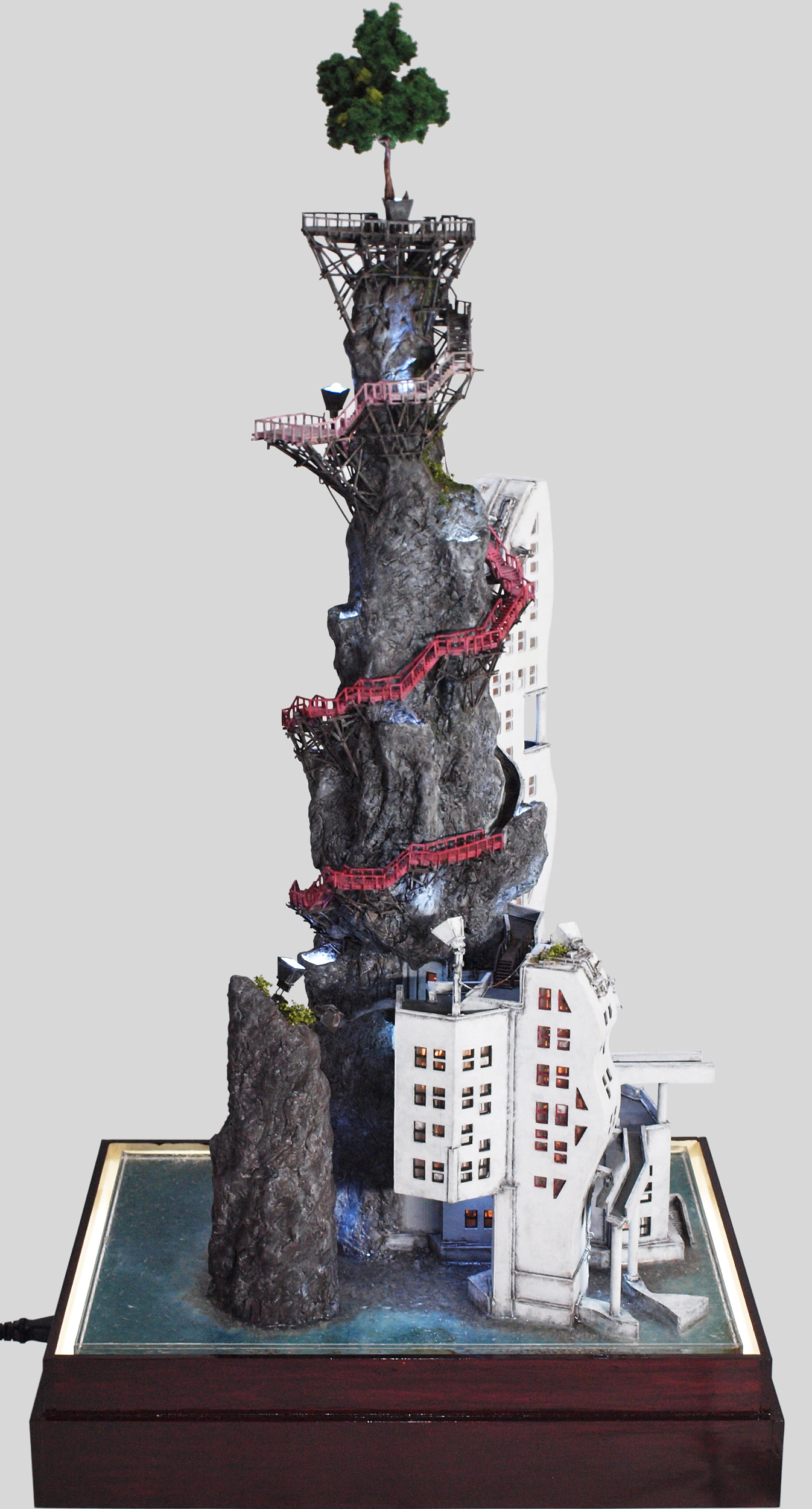
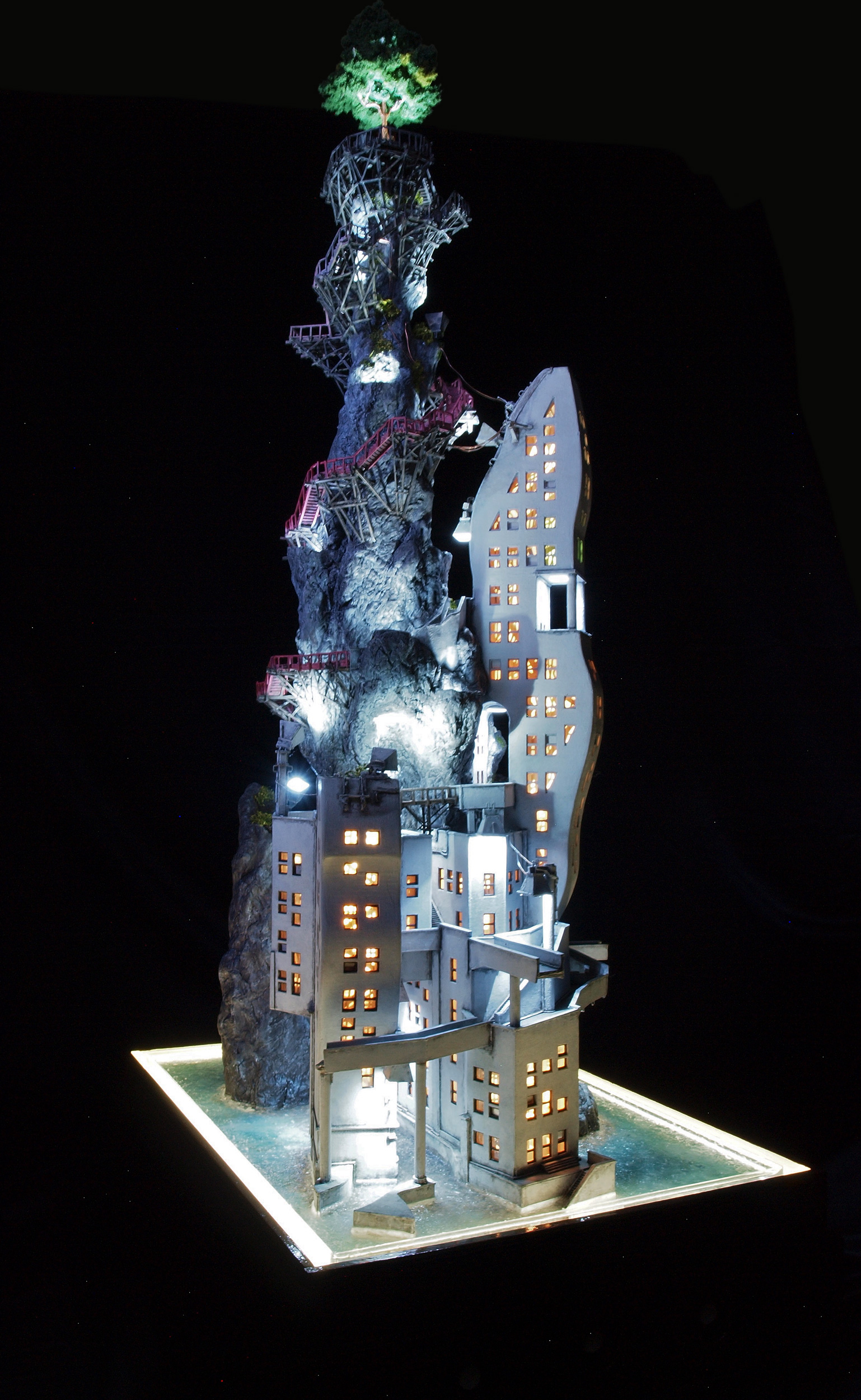
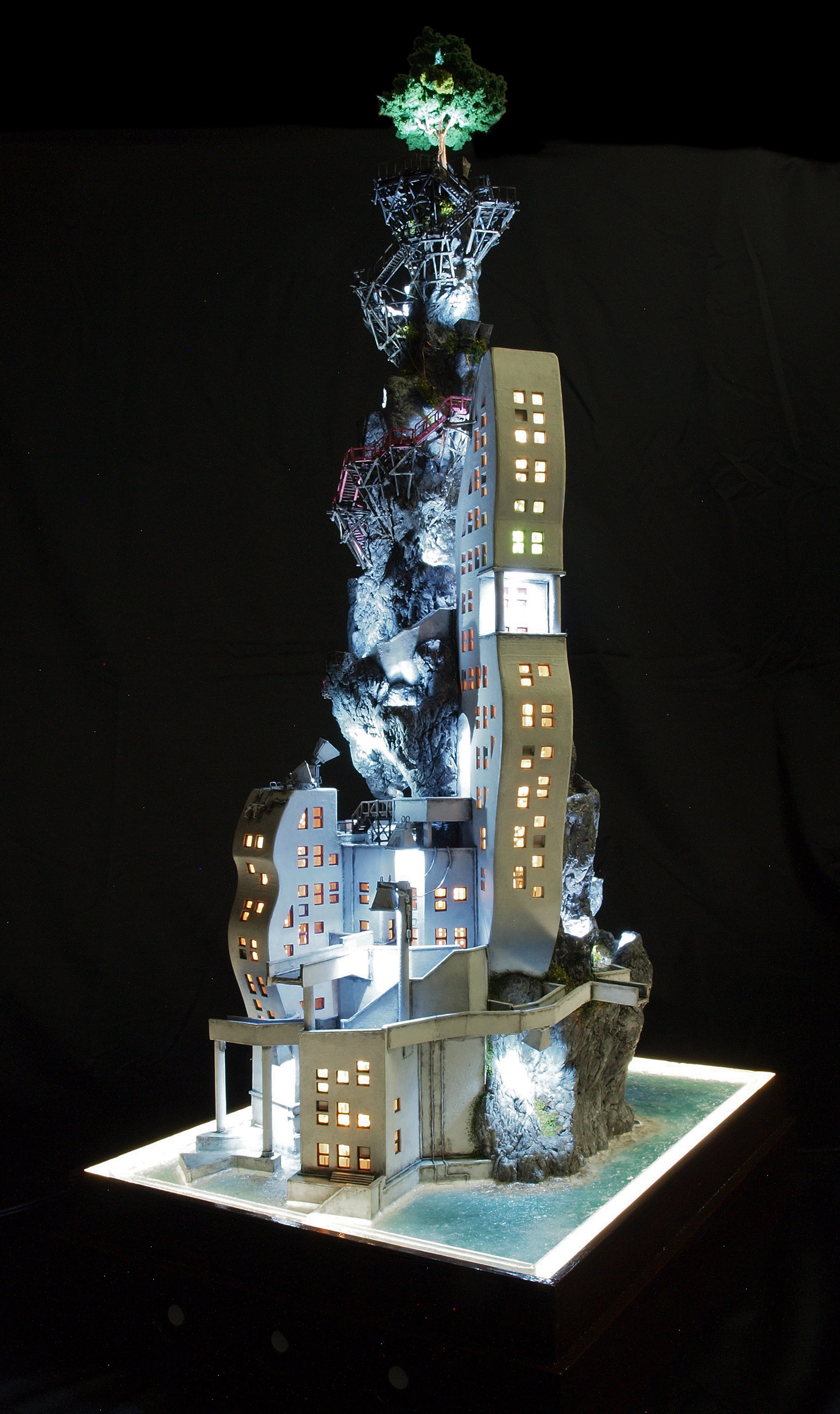
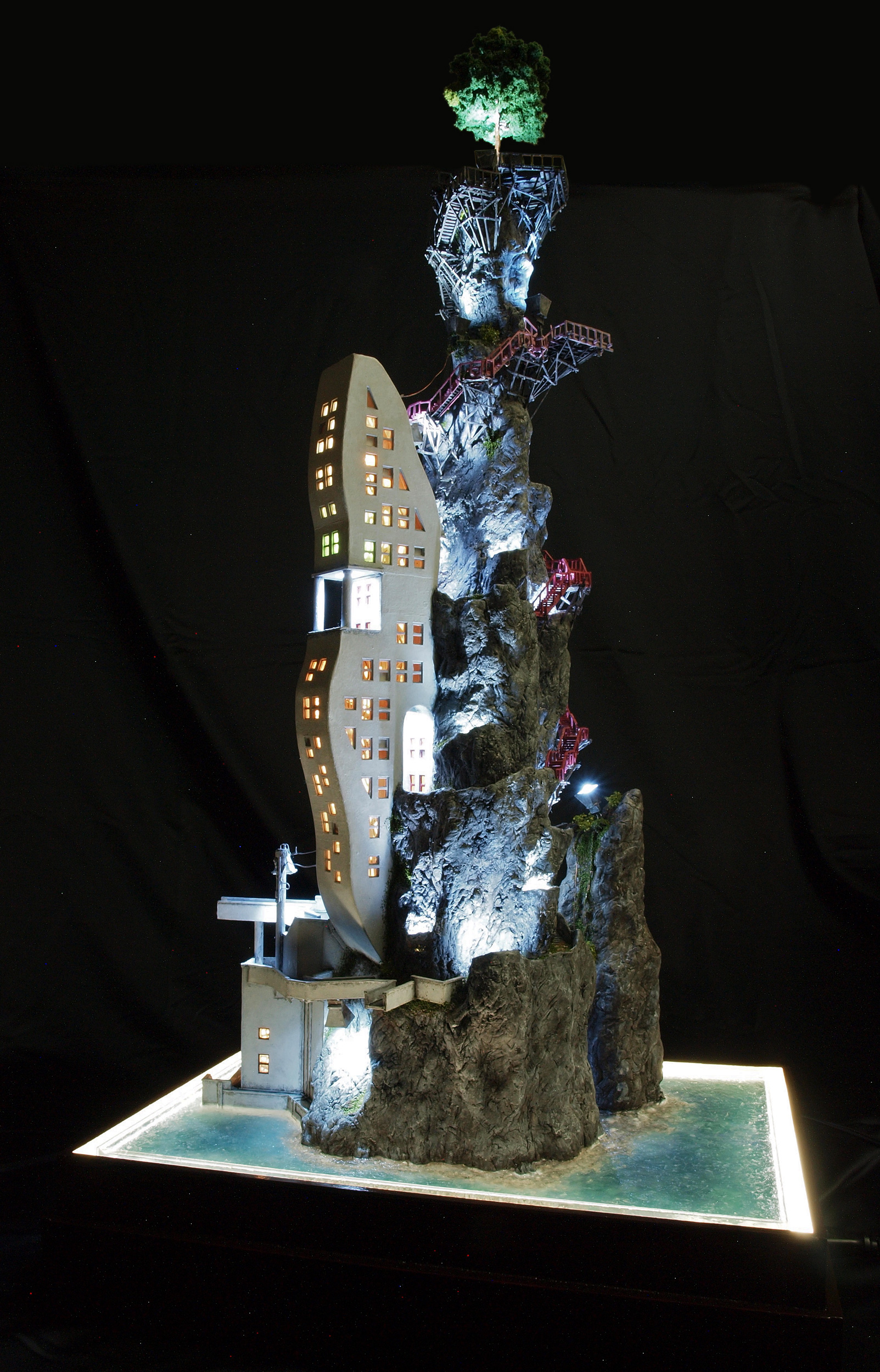
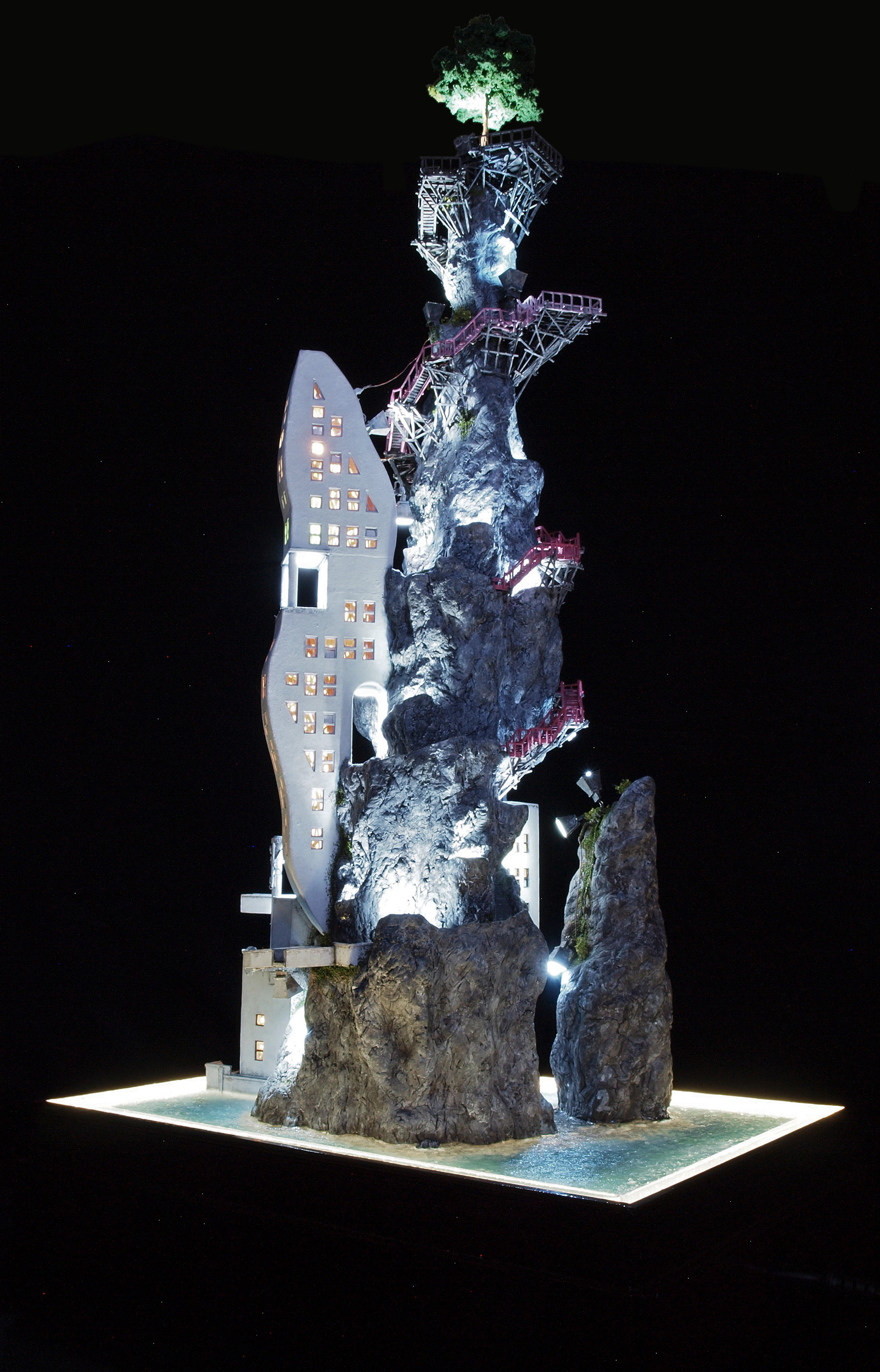
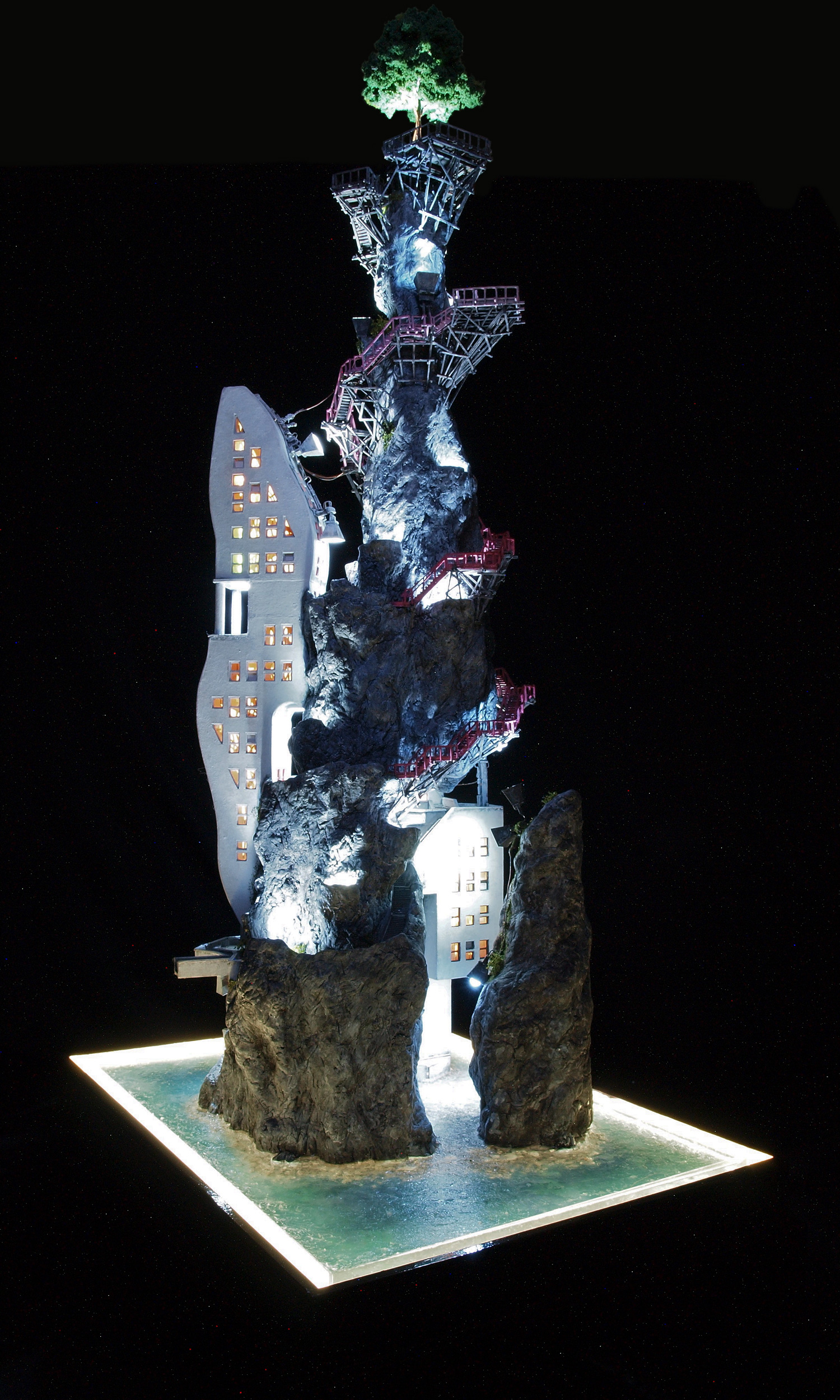
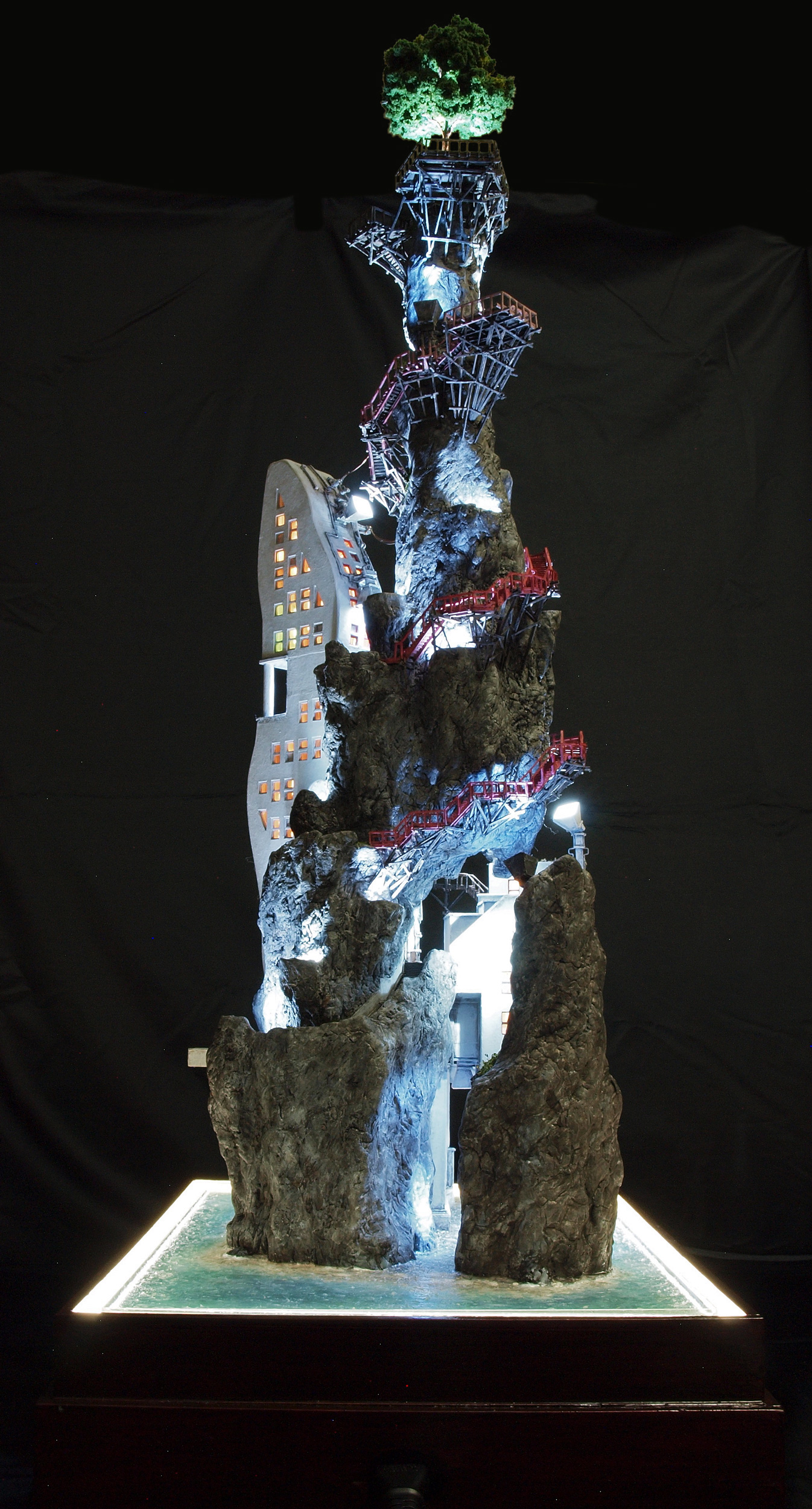
and
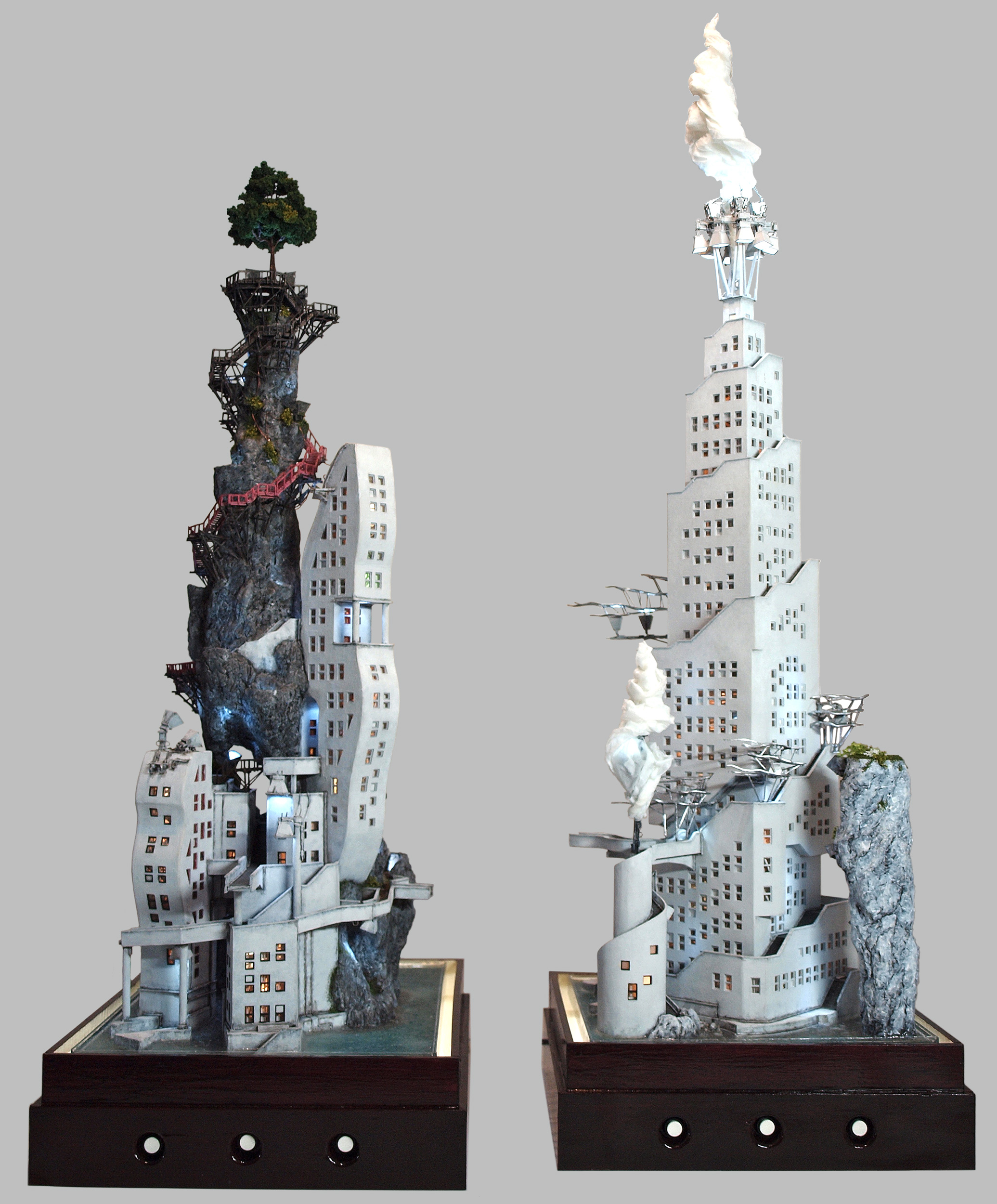
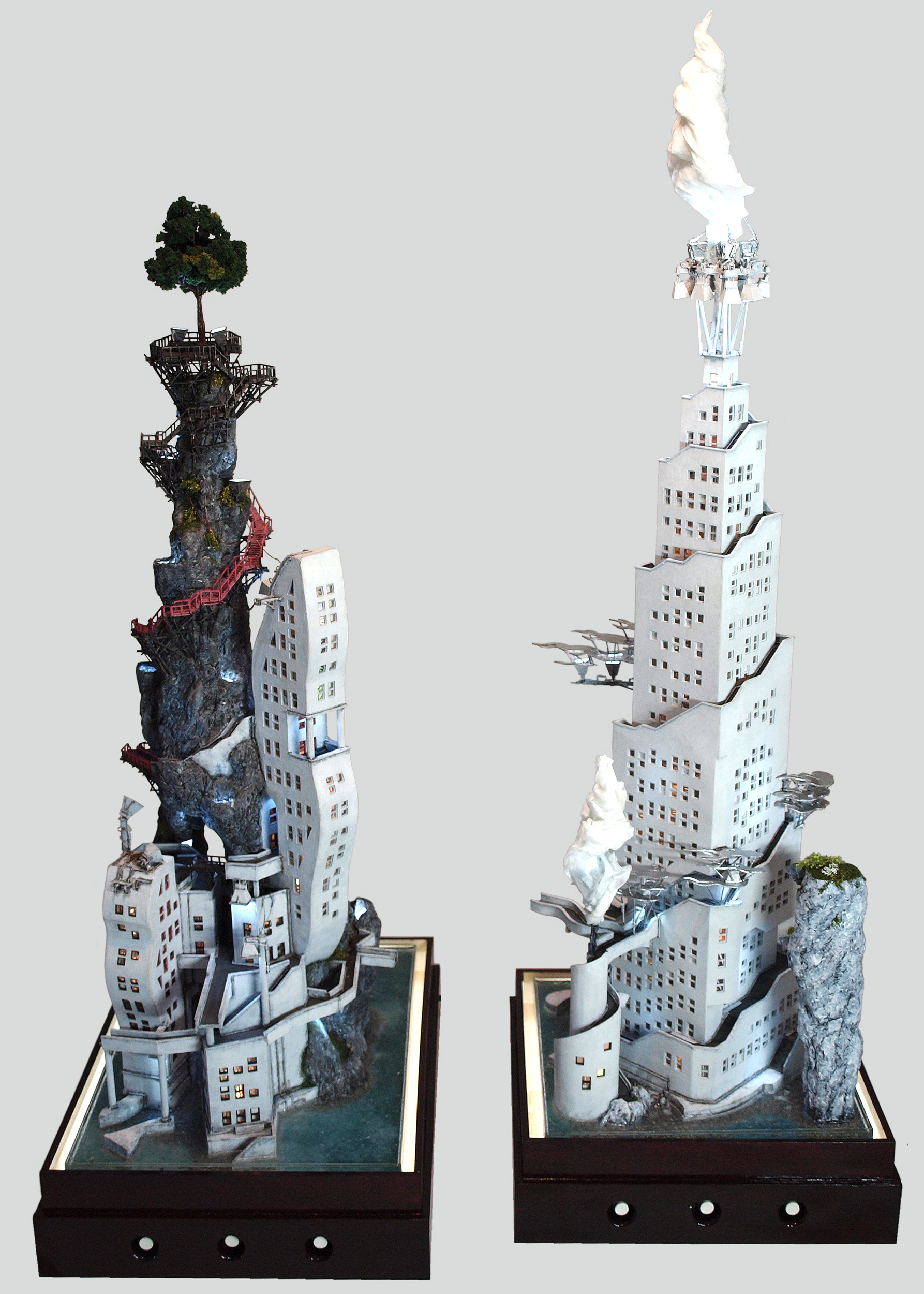
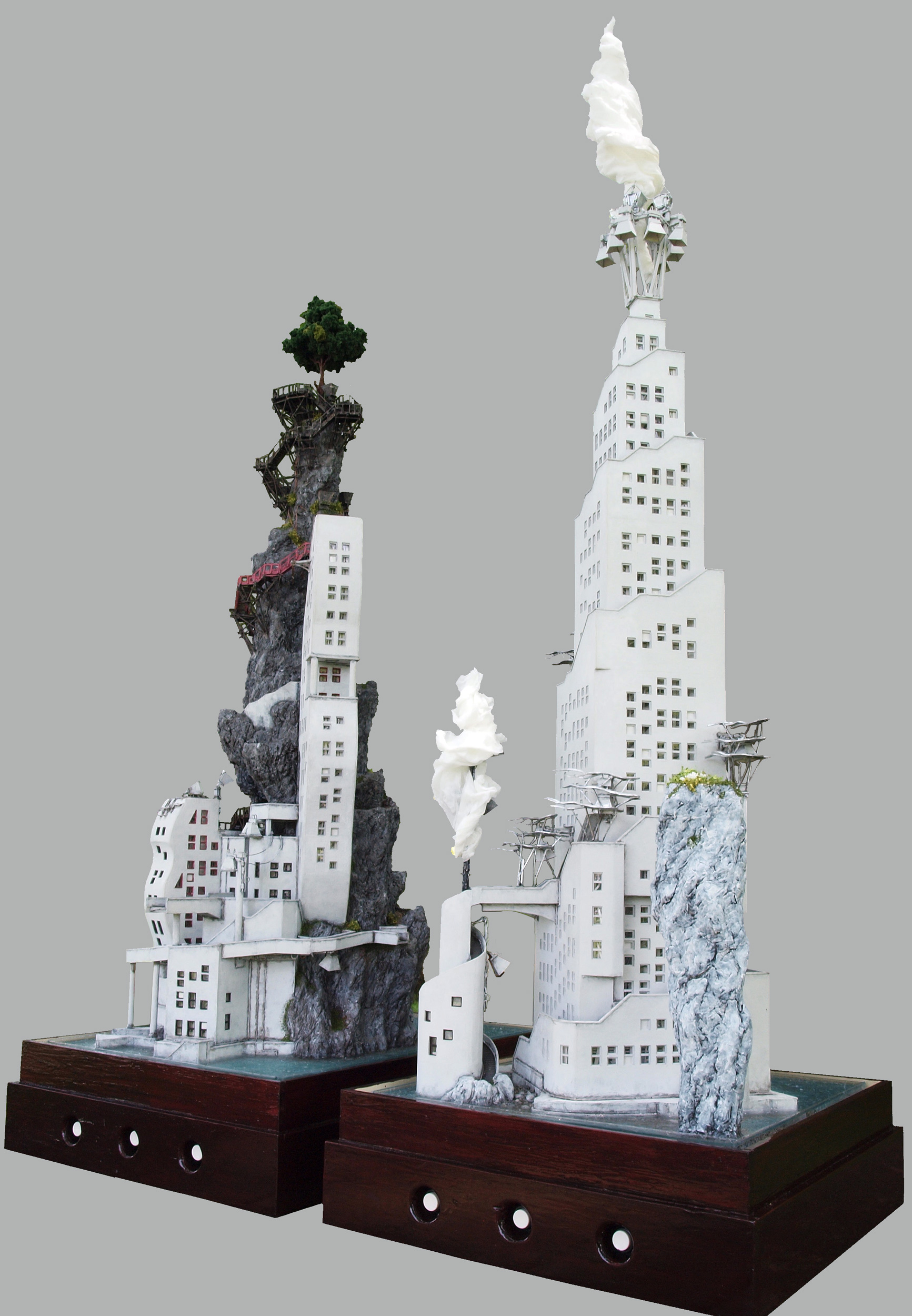
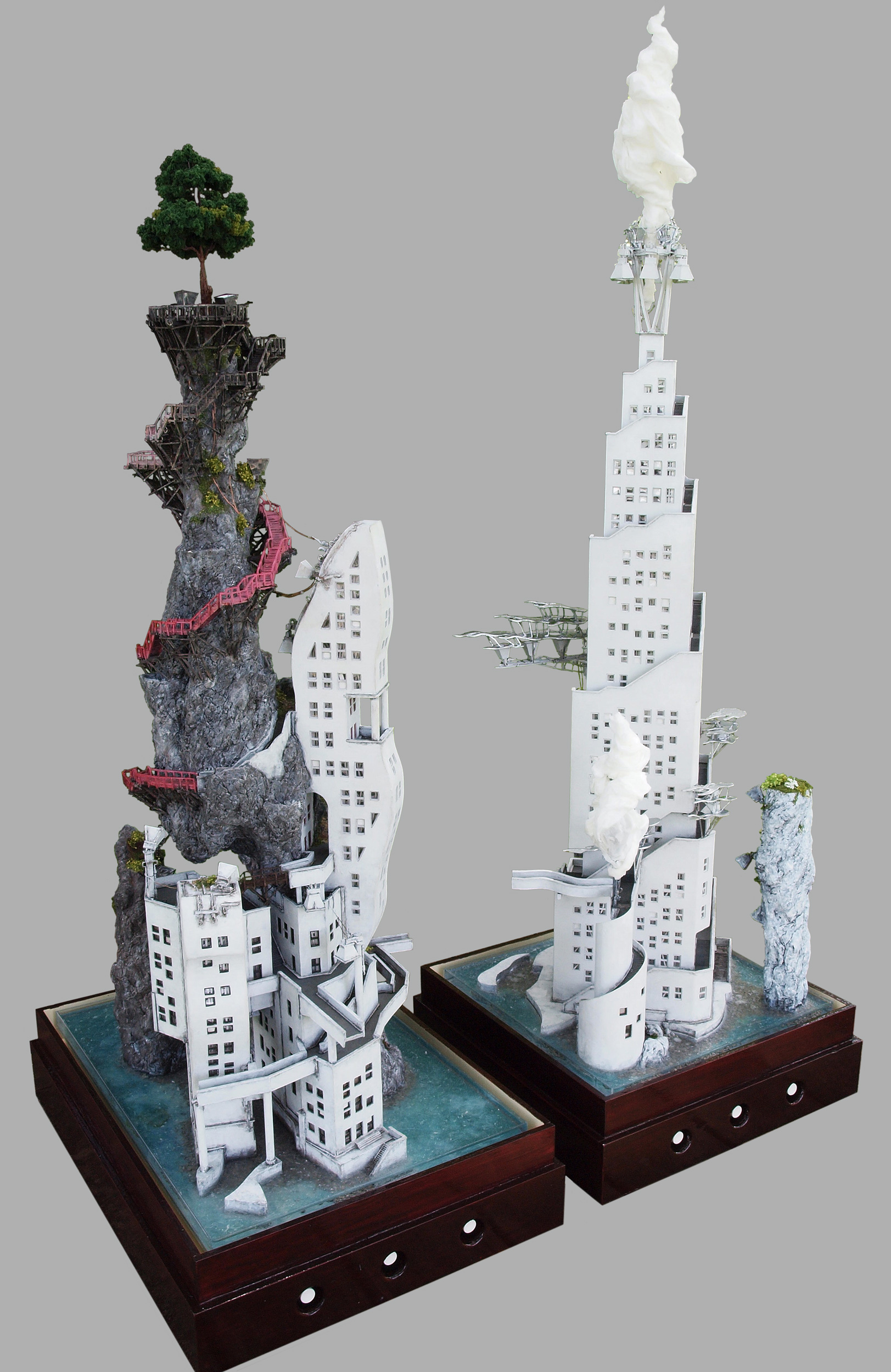
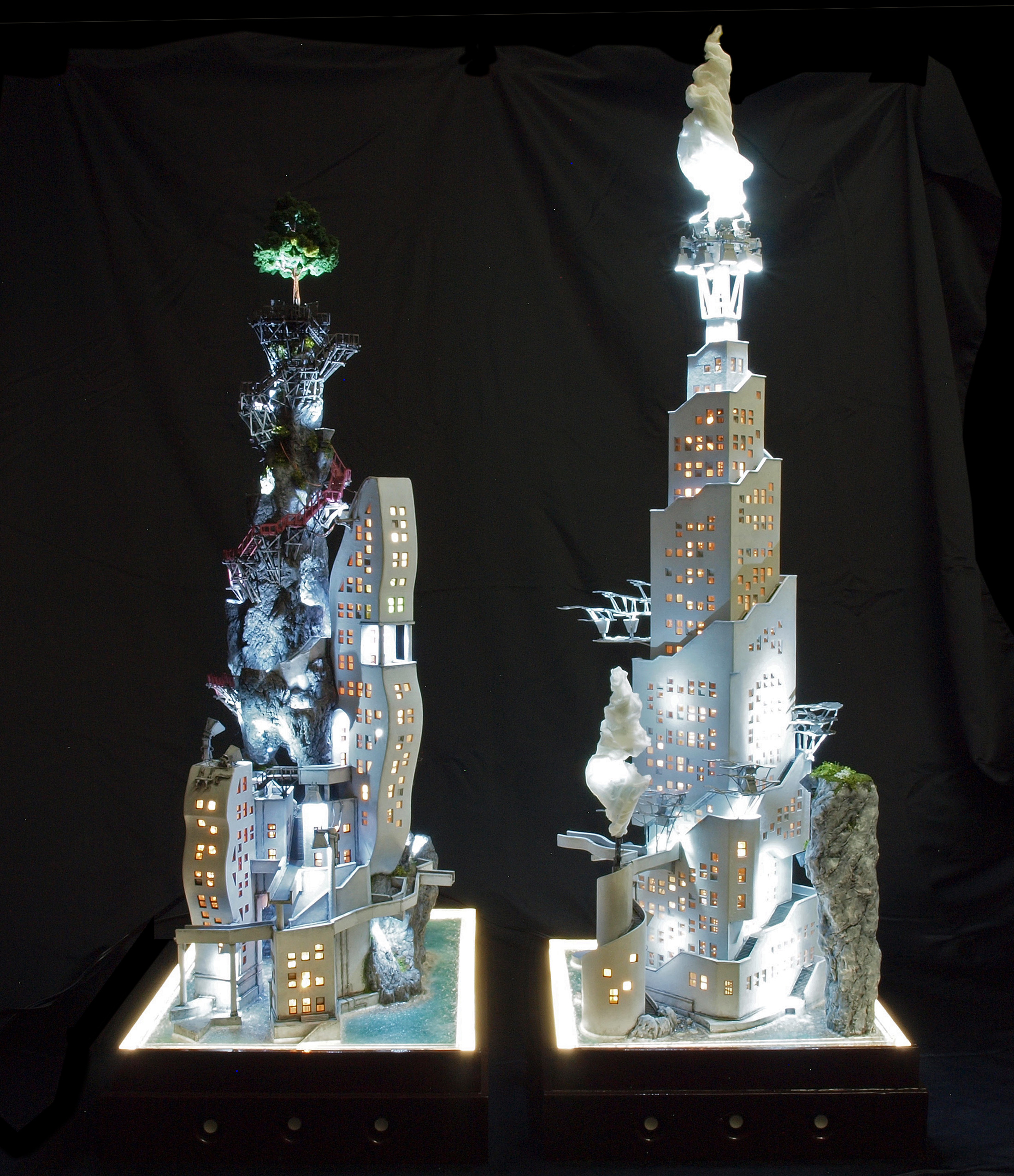
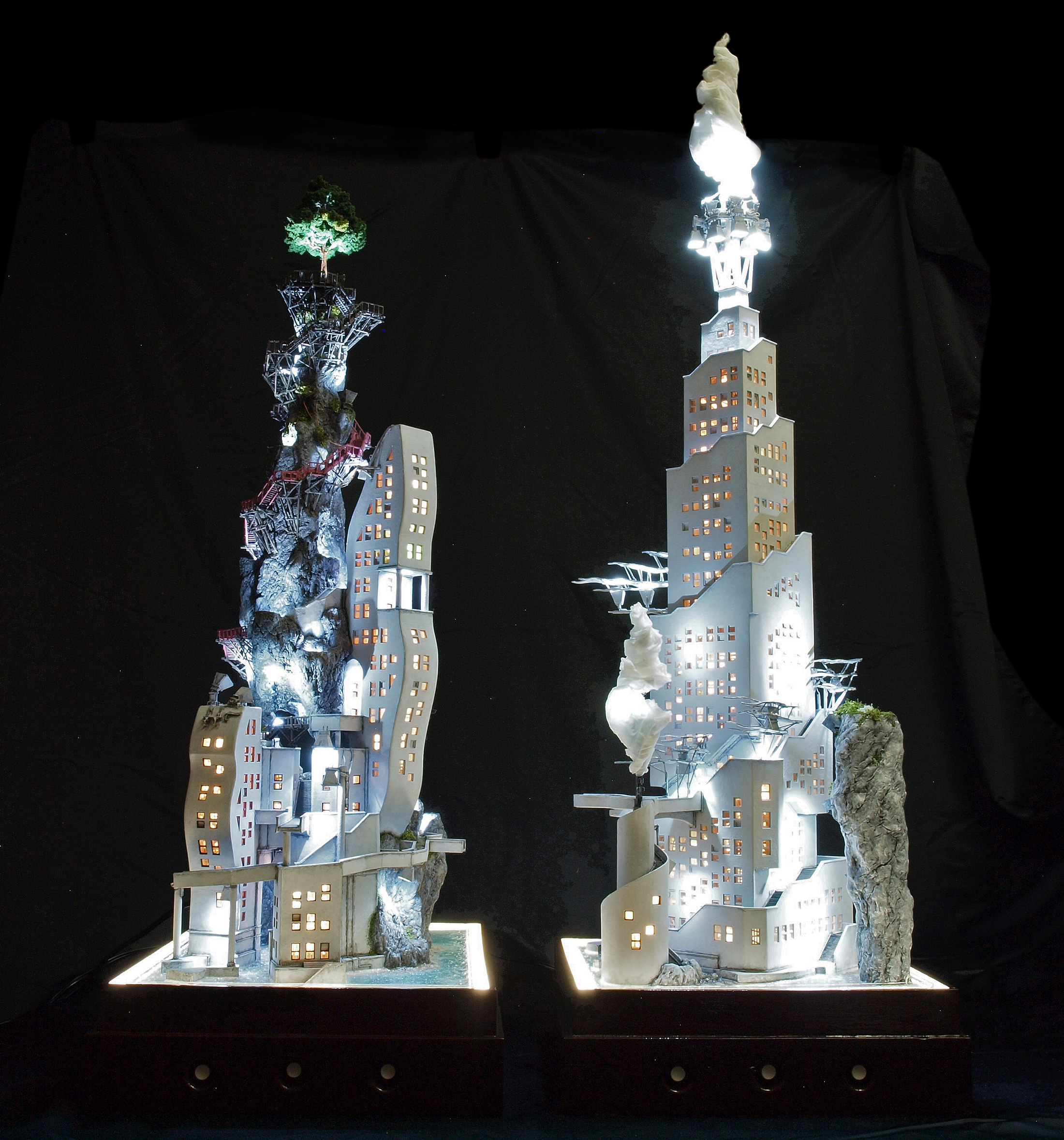
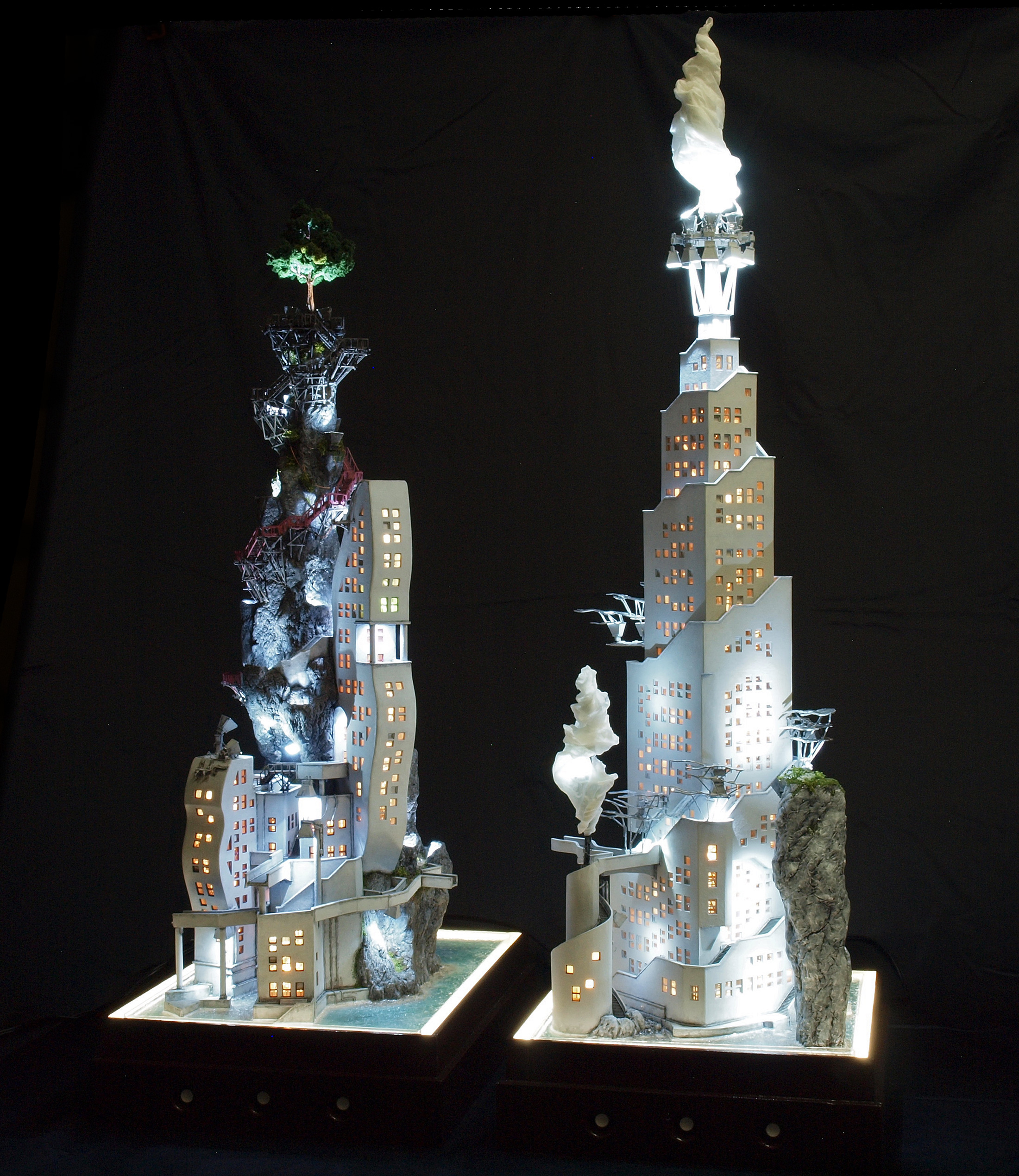
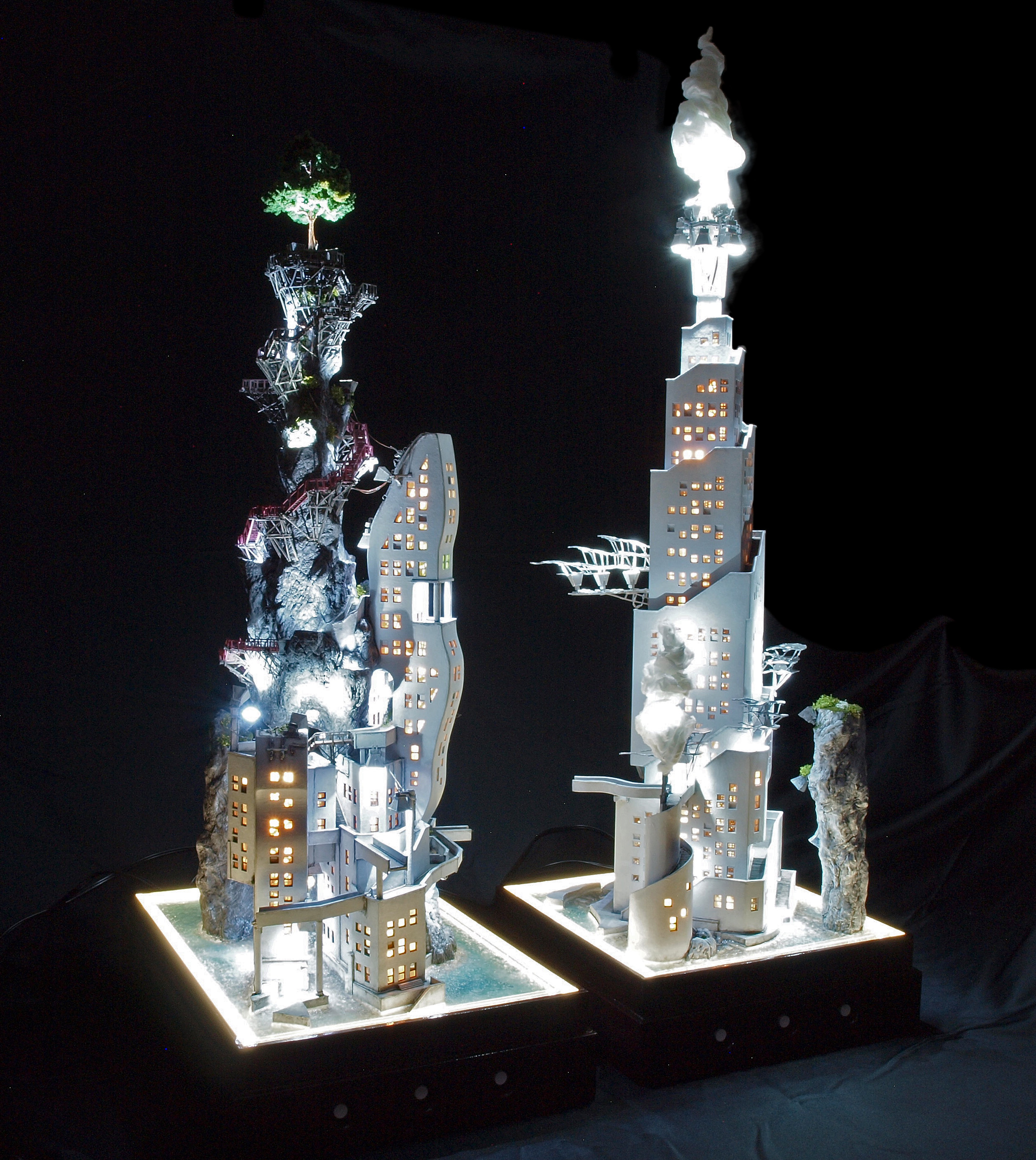
「月見台」とは、月を眺めるために設けられた日本に古くからある空間です。 実用的な目的というよりも、月を静かに眺め、その美しさを楽しむための場所です。 「月見」という文化は、古くは平安時代の貴族たちの雅な文化とも深く関わっており、月を眺めながら酒や宴を楽しんだり、月に寄せて和歌を詠んだりと、日本の上流階級の人々は月を単なる夜空の天体としてではなく、自然を眺め、季節を感じ、心を寄せる対象として愛でてきた歴史があります。 現在では、「月見うどん/そば」や「月見酒」など、「月見」という言葉や風情が食文化にも取り入れられ、庶民の生活の中にもその感覚が残っています。
日本人は昔より、美しい自然の風景や風情を愛でる感覚を「花鳥風月」という言葉で表してきましたが、それにあやかった「花鳥風月シリーズ」をもくろんでいた時期があり、2016年に1作目「絶壁月見台」を制作、「花・鳥・風」に取りかからないうちに「月」の2作目を制作してしまいました。 シリーズ「花鳥風月」の完成は今のところ未定です。(2026年現在)
(縮尺 S=1:150程度を想定・Nスケール)
2020年(令和2年)6月17日発表
絶壁月見台 1|Table for viewing the moon on the Cliff -No.1 (2016)
Tsukimidai (Moon-Viewing Platform) is a traditional Japanese space created for viewing the moon. Rather than serving a practical purpose, it is a place for quietly observing and appreciating the moon.
The tradition of tsukimi (moon viewing) has long been associated with the refined culture of the aristocracy, dating back to the Heian period. People would enjoy drinks and gatherings while viewing the moon, and compose waka poetry inspired by it. For the upper classes of Japan, the moon was not simply an object in the night sky, but something to be appreciated as part of nature, as a way of experiencing the changing seasons, and as an object of contemplation.
Today, the word and concept of tsukimi also remain in everyday life, including foods such as tsukimi udon and tsukimi soba, as well as tsukimi-zake (sake enjoyed while viewing the moon).
In Japan, the appreciation of beautiful natural scenery and the subtle charm of the seasons has long been expressed by the phrase “Kachōfūgetsu” (花鳥風月:Flowers, Birds, Wind, Moon)—literally, “flowers, birds, wind, and moon.” For a time, I conceived a series inspired by this idea, which I called the “Kachōfūgetsu Series.” In 2016, I created the first work, “Cliffside Moon-Viewing Platform.” Before I could begin work on the “flowers,” “birds,” and “wind,” however, I somehow ended up making a second work centered on the “moon.”
For now, there is no definite plan for when—or whether—the “Kachōfūgetsu” Series will be completed. (As of 2026.)(Approximate scale: S = 1:150 / N scale.)
Announced on June 17, 2020
絶壁月見台 1|Table for viewing the moon on the Cliff -No.1 (2016)
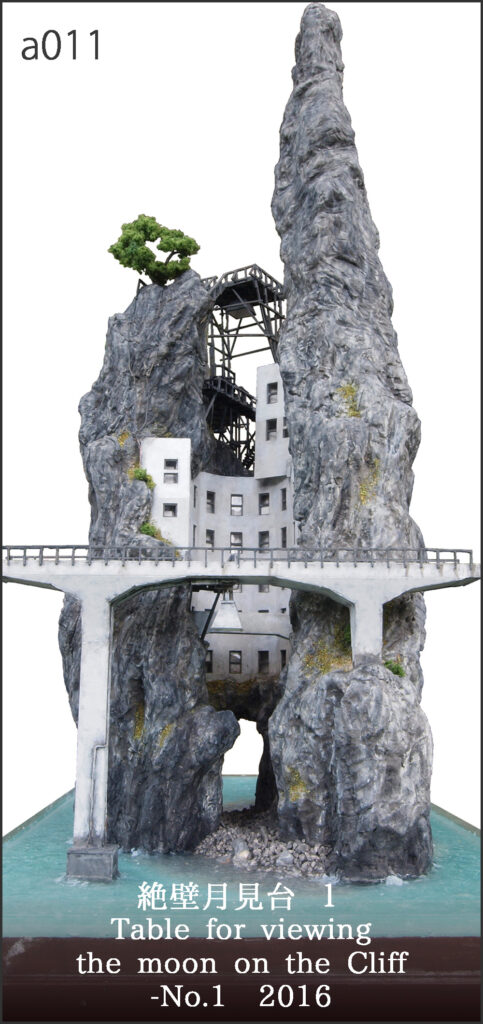
絶壁月見台シリーズ
(1・2)
Table for viewing the moon on the Cliff Series
(1,2)
スケール / Scale: 約 1:150 (Approx. 1:150)
サイズ / Dimensions(オブジェ本体+アクリルケース / Object + acrylic case)
:H約 880 × W 270 × D 370 mm
:Approx. H 34.6 × W 14.6 × D 10.6 inches
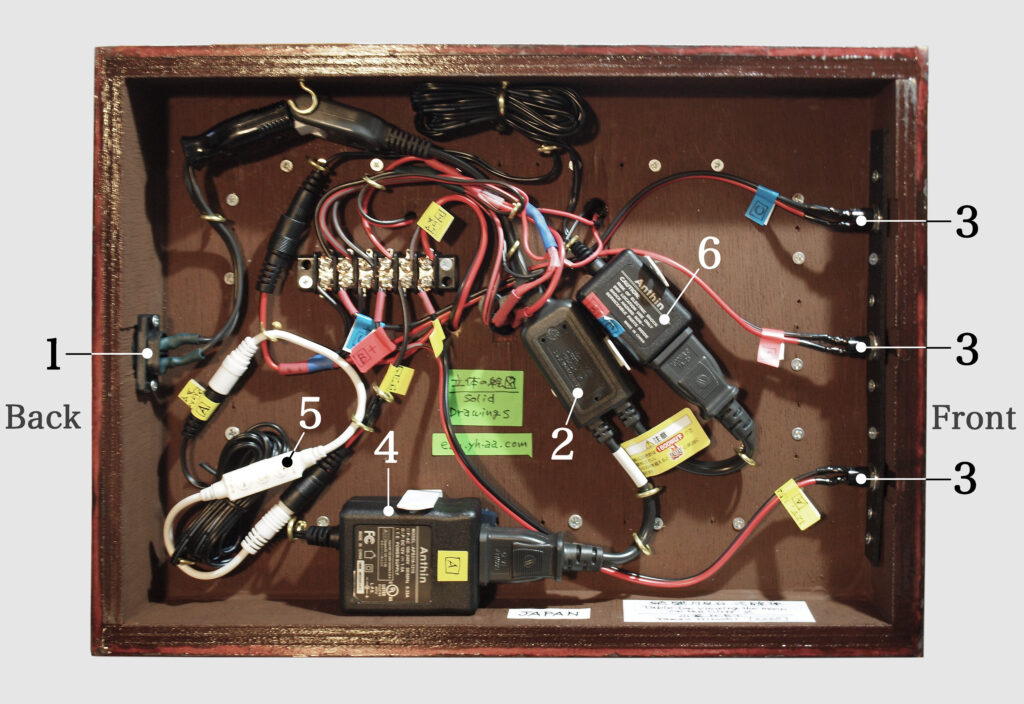
- 1:ACジャック(コード着脱式)
- 2:AC分配機(1→3)
- 3:個別スイッチ(オルタネート・3系統)
- 4:ACアダプター(AC 100-240V →12V・1.5A、台枠外周部テープLED用)-記号A
- 5:調光機(台枠外周部用・記号A)
- 6:ACアダプター(AC 100-240V → DC 5.0V・2.0A、建物 内部LED用)-記号B・C
- ACアダプターを電源としました。 LEDによる照明は3系統あり、個別にスイッチを設けています。
- 台枠外周部に1系統(記号A)
- 建物内部の電球色LED用に1系統(記号B)
- 外部ライトアップ白色LED 用に1系統(記号C)
- 以上の計3系統のACアダプター容量は、計算上必要とされるアンペア数の約1.4倍を目安に選択。
- このオブジェに使用している全ての 3mm砲弾型LEDは、1つ1つに CRD(E-153)と560Ω抵抗 をハンダ付けし、LEDの寿命に配慮しています。(LEDは全て並列接続)
- 1:AC Power Jack (Detachable Power Cord)
- 2:AC Power Splitter (1-to-3)
- 3:Individual Switches (Alternate Type, 3 Circuits)
- 4:AC Adapter (AC 100–240 V → DC 12 V, 1.5 A, Compatible with 100–240 V AC Input, for LED Tape Around the Perimeter of the Base Frame) — Designation A
- 5:Dimmer (for LED Tape Around the Perimeter of the Base Frame, Designation A)
- 6:AC Adapter (AC 100–240 V →DC 5.0 V, 2.0 A, for Interior Building LEDs) — Designation B,C
- An AC adapter is used as the power source. The LED lighting is divided into three circuits, each with its own switch.
- One circuit for the perimeter of the base frame (A)
- One circuit for the warm-white LEDs inside the buildings (B)
- One circuit for the white LEDs used for exterior illumination (C)
- The capacities of the three AC adapters listed above were selected to provide approximately 1.4 times the amperage required by calculation.
- For the longevity of the LEDs, each 3mm round-type LED used in this object is individually soldered with a CRD (E-153) and a 560Ω resistor. All LEDs are connected in parallel.
- 照明: 個別スイッチ3系統(台枠外周部、建物内部、建物外部ライトアップ)、銅線
- 主な使用材料:
- アクリルケース(防塵用・押出し透明5mm)、
- ボール紙(世界堂 扱い・約1mm厚・株式会社ORION 製「白ボール・A3」)
- イラストボード
- 透明アクリル板(窓部分・0.2mm厚)、
- 木材(台座部分=シナベニア、ラワンベニア、アガチス単板)、
- 艶消しアクリル絵具(ホルベイン・アクリラガッシュ)
- ターナー「MILK PAINT・スノーホワイト」、
- 高透明レジン「プロクリスタル880 」(水面)
- ホルベイン「CRYSTAL VARNISH」(つや出し画面保護用ワニス・水面の波の表現に重ね塗りで使用)」
- 他
- 照明: 個別スイッチ3系統(台枠外周部、建物内部、建物外部ライトアップ)、銅線
- 建物本体:3mm砲弾型LED + CRD(E-153)+ 560Ω抵抗 + オルタネートスイッチ(2系統)
- 台枠外周部:テープLED(台枠外周部、高演色2835 (60LED/m) 1.3m + オルタネートスイッチ(1系統)
他。
- Main Materials:
- Acrylic display case (dust protection; 3 mm clear extruded acrylic);
- cardboard (approx. 1 mm thick; “White Board A3,” manufactured by ORION Co., Ltd. and distributed by Sekaido);
- llustration board;
- clear acrylic sheet (0.2 mm thick, used for windows);
- wood (base: Japanese plywood, lauan plywood, and agathis veneer);
- matte acrylic paints (Holbein Acryla Gouache);
- Turner “MILK PAINT – Snow White”;
- highly transparent resin (Pro Crystal 880, used for the water surface);
- Holbein “CRYSTAL VARNISH” (a gloss varnish for surface protection, also applied in multiple layers to create the appearance of ripples on the water surface);
- and other materials.
- Lighting: Three independently switched circuits (base-frame perimeter, building interior, and exterior building illumination), copper wire
- Building: 3 mm bullet-type LEDs + CRDs (E-153) + 560 Ω resistors + latching switches (two circuits)
- Base-frame perimeter: LED tape (high-color-rendering 2835 LEDs, 60 LEDs/m, 1.3 m) + latching switch (one circuit)
- Other materials and components.

a027 絶壁月見台 弐號棟|Table for viewing the moon on the Cliff -No.2 2020
Production and photography by Yamao Hiroshi, 2020
(OLYMPUS E-620 + ZUIKO 9-18mm/14-42 mm)
2020年(令和2年)6月17日発表
Announced on June 17, 2020
2026年(令和8年)9月26日移転掲載
Published on September 26, 2026, following the site relocation.


Contents